Stack up against Calm

Compare Your Deck

Calm's 2018 Pitch Deck

Consumer
Stage: Series A
Raised: $27M
Year: 2018
Slides: 20
Outcome: Valued at $2B

Pitch Deck

1 / 20
Slide 1
Click to expand

Deck Analysis

This Series A pitch deck from Calm uses strong branding, clear mission framing, product depth, and hard traction metrics to tell a concise growth story for a consumer mental wellness app. The deck pairs evocative imagery and a calming visual identity with evidence of market momentum (downloads, subscribers, revenue), product breadth, and a small/high-margin team — the combination that helped Calm raise $27M at a high valuation. Notable is how the deck balances emotion (brand, mission) with data (user and financial traction), offering a blueprint for consumer apps aiming to scale via subscription monetization.

The Opening: Brand and Visual Positioning

The Opening: Brand and Visual Positioning

The first slide (logo over a serene mountain-lake photo) immediately sets the emotional tone of the business: calm, restorative, and premium. Using a single strong visual with large negative space and the app icon centered communicates the product’s purpose in one glance and establishes a cohesive brand that carries through the rest of the deck.

This approach works because Calm is selling an experience as much as a product. Founders can learn the value of an opening slide that emotionally primes the audience and mirrors the user experience rather than overwhelming with text. A consistent, well-photographed visual identity builds credibility and helps an abstract wellness product feel tangible and trustworthy.

Key Takeaway: Use an opening visual that embodies your product’s core emotional benefit — keep it simple and consistent across the deck.

Mission & Problem Framing: Why This Product Matters

Mission & Problem Framing: Why This Product Matters

Slide 6 states Calm’s mission — 'To make the world happier and healthier' — using large, legible type over the same peaceful landscape. The slide is concise and aspirational, which is appropriate for a consumer wellness brand seeking to scale: it communicates purpose without getting bogged down in operational detail. This positions Calm as mission-driven, a narrative that resonates with users, partners, and investors interested in impact.

Slide 7 (the WHO quote, 'Stress is the health epidemic of the 21st century') effectively quantifies urgency and validates market need through an authoritative third-party citation. Pairing a mission statement with an external statistic is a powerful combo: mission gives meaning, the statistic gives scale and credibility. Founders should note that problem framing should link emotional resonance (mission) to objective urgency (data or authoritative quotes) to justify product-market relevance.

Key Takeaway: Combine an aspirational mission with an authoritative data point to make your product feel both meaningful and necessary.
Product Depth: Features and Experience

Product Depth: Features and Experience

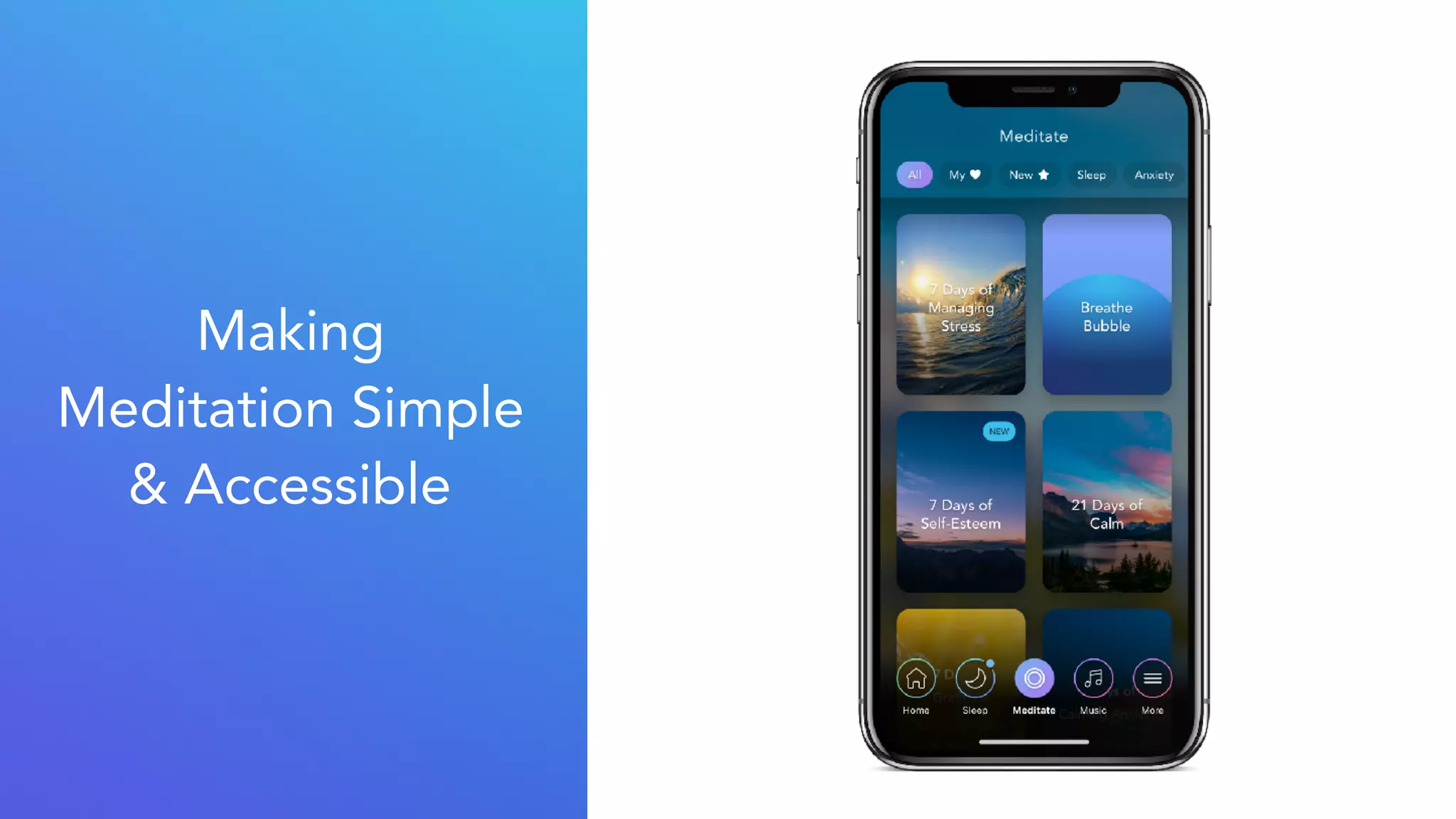
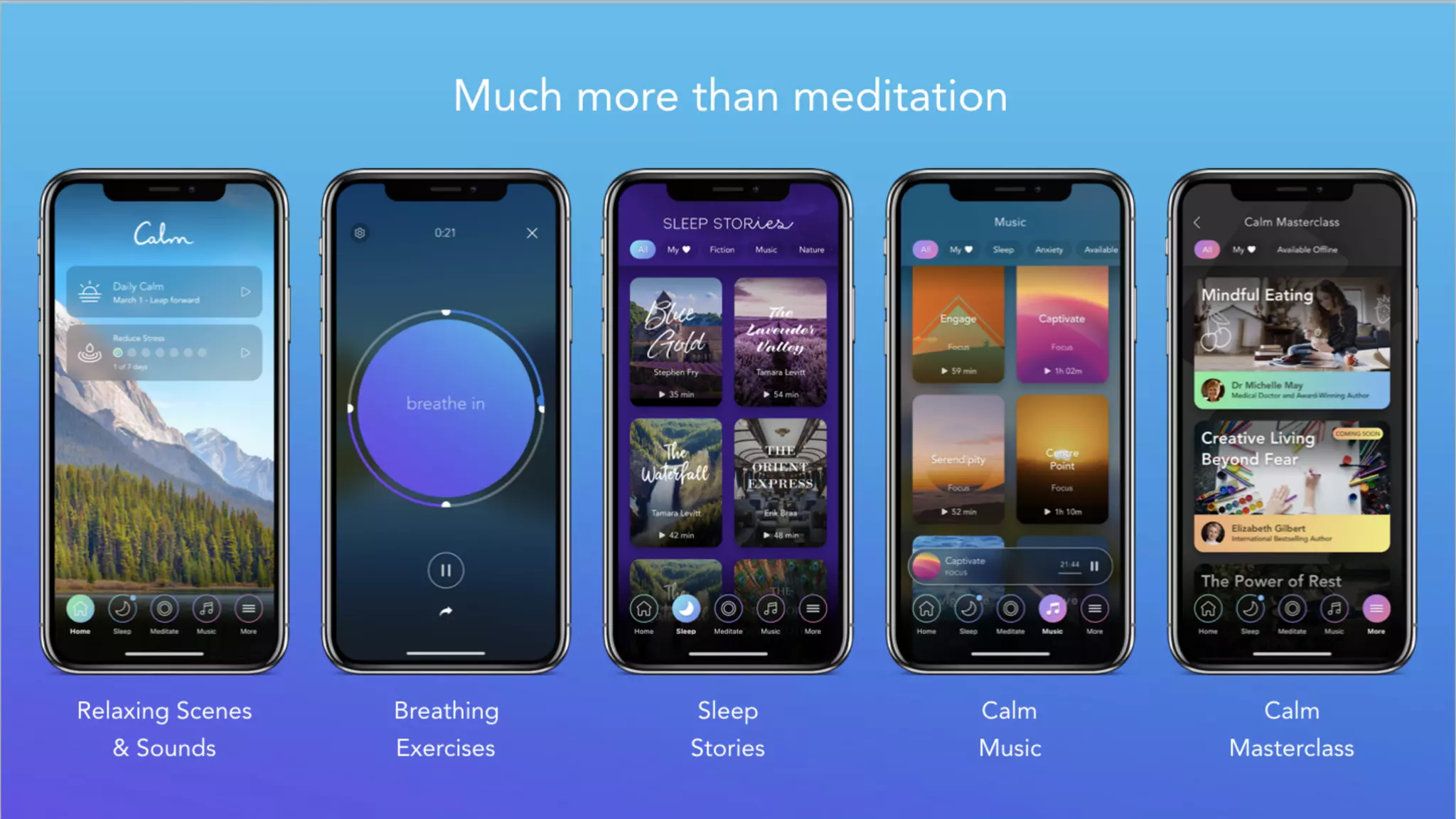
The product slides (e.g., the 'Much more than meditation' page) showcase multiple product pillars — relaxing scenes, breathing exercises, sleep stories, music, and masterclasses — using clean device mockups. This demonstrates breadth without distracting detail: investors immediately see that Calm is not a single feature app but a multi-modal wellness platform, increasing the perceived lifetime value and differentiation versus single-feature competitors.

The visual treatment is important: polished phone mockups, consistent color palette and minimal copy let the UI speak. For founders, this demonstrates how to present product variety succinctly — emphasize representative experiences, show them in situ (on-device), and avoid long feature lists. The goal is convincing the viewer that the product is delightful, repeatable, and monetizable.

Key Takeaway: Showcase representative, polished product experiences in device mockups to convey breadth and user delight without text overload.
Traction: Downloads and Momentum

Traction: Downloads and Momentum

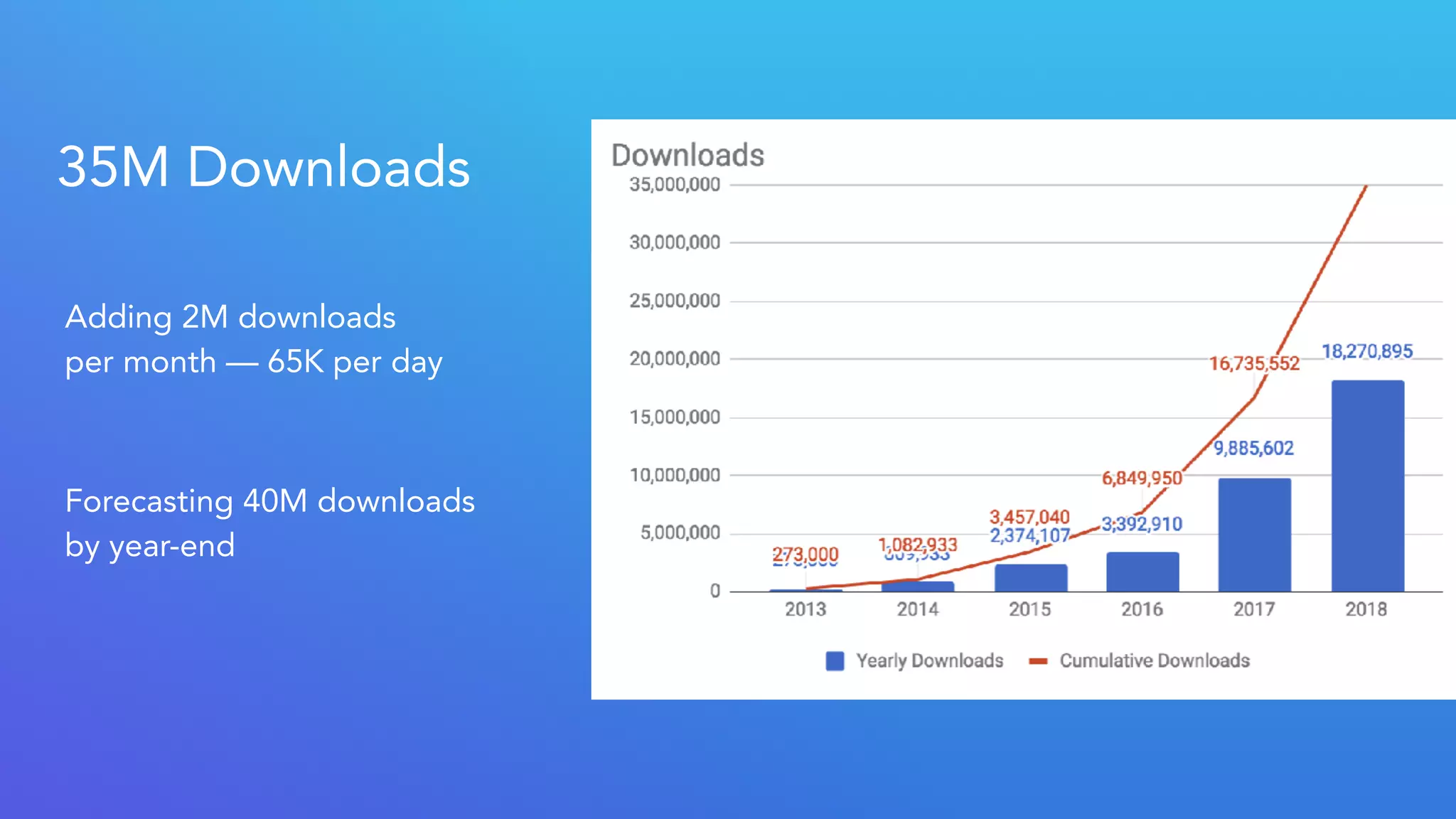
The downloads slide highlights explosive user growth (35M downloads, adding ~2M per month), using a simple chart and supporting callouts. This kind of metric is persuasive for consumer investors because it proves product-market fit at scale and indicates strong top-of-funnel acquisition — both crucial for a subscription business model. The slide communicates velocity (growth rate) as clearly as absolute scale.

Founders should note how Calm pairs a single headline metric with context (monthly additions, daily rates, forecast) so investors can assess sustainability. When showing downloads, include both cumulative and velocity metrics and keep the visual tidy: investors first scan for scale, then for growth trend and forecast credibility.

Key Takeaway: Present a headline adoption metric plus velocity/context to show both scale and current momentum in a single clear slide.
Monetization: Paying Subscribers and Conversion

Monetization: Paying Subscribers and Conversion

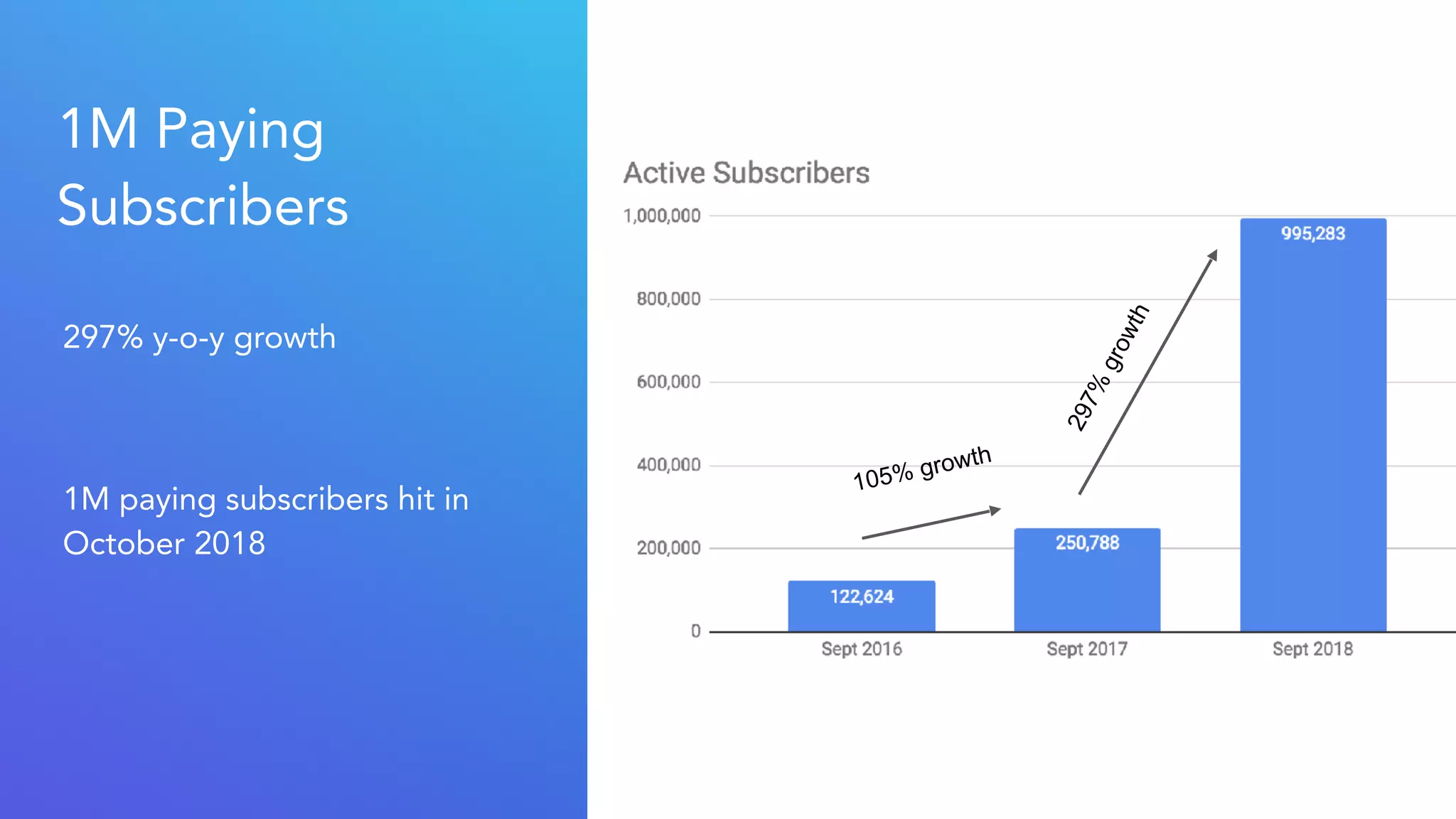
Calm dedicates a focused slide to paying subscribers (1M paying, 297% year-over-year growth). That clarity — separating free downloads from paid conversions — is critical for subscription businesses. The slide demonstrates that Calm isn’t only driving installs but also converting users into recurring revenue, a different and more valuable signal to investors.

The slide also calls out the timing (1M paid hit in October 2018), which helps investors understand cadence and inflection points. For founders, the lesson is to separate user adoption metrics from monetization metrics and to highlight conversion inflection points — these are often the most important predictors of long-term valuation.

Key Takeaway: Clearly separate and emphasize paid conversion metrics and growth inflection points — investors value recurring-revenue signals over raw installs.
Revenue & Unit Economics: Profitable Growth

Revenue & Unit Economics: Profitable Growth

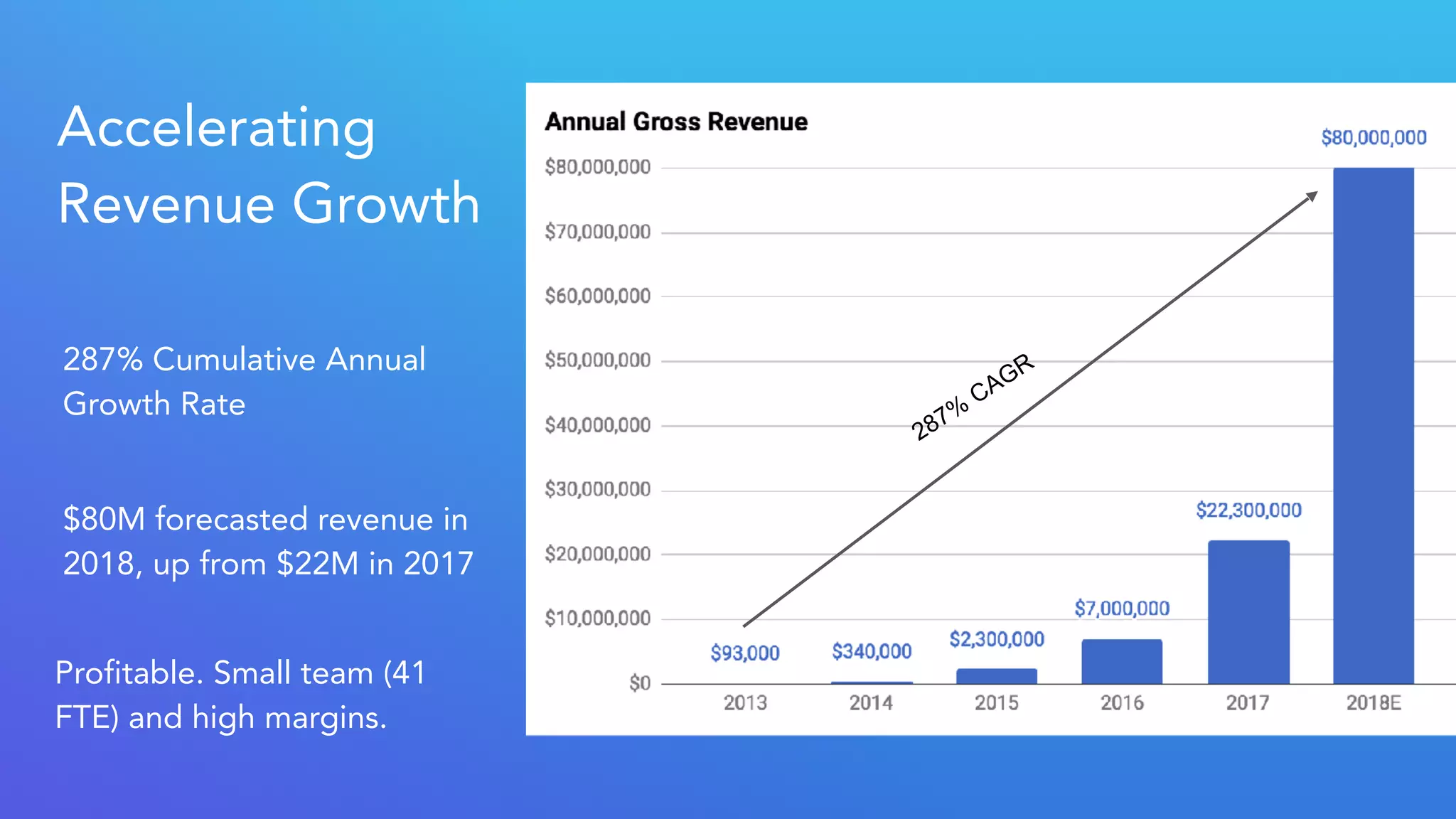
The revenue slide shows a steep trajectory ($7M in 2016 to $22.3M in 2017 and $80M forecast for 2018) and calls out a 287% CAGR. Combining revenue growth with notes on profitability and a small team (41 FTE) tells a complete financial story: rapid scale but operationally efficient. This is compelling to investors who want growth but also care about capital efficiency and margins.

This slide balances figures and qualitative context (profitable, small team), which helps investors quickly assess scalability and capital needs. Founders should emulate this structure: present historical revenue and forward-looking forecasts, show CAGR, and include qualitative signals of healthy unit economics (profitability, cohort retention, team efficiency) to reduce perceived risk.

Key Takeaway: Show historical revenue, a realistic forecast/CAGR, and contextual notes on profitability or unit economics to convince investors your growth is sustainable.
Team: Founders and Company Culture

Team: Founders and Company Culture

The deck includes a slide with the two co‑founders front-and-center and another image showing a cohesive team. This humanizes the company and signals culture fit for a consumer brand where content creation and product design matter. Presenting a small, engaged team alongside the product underscores the claim of being a tight, high-impact organization.

Founders should remember that investors invest in teams as much as ideas: include a concise team slide that communicates relevant experience, complementary skills, and culture. Visuals of the actual team (photos) can strengthen credibility, especially when paired with traction and financial evidence that shows the team executes.

Key Takeaway: Use team visuals and a short, complementary narrative to show capability and culture — investors want to see who will execute the plan.

Conclusion: Key Lessons

Calm’s deck succeeds by marrying evocative branding and mission-driven storytelling with crisp, high-impact metrics (downloads, paying subscribers, revenue growth) and polished product presentation. Its structure — open with emotion, define the problem, show product breadth, prove traction, and finish with monetization and financials — is a repeatable framework for consumer subscription startups. The deck is concise, visually consistent, and prioritizes the metrics investors care about.

Actionable advice for founders: lead with a strong, product-aligned visual identity; pair mission with authoritative market validation; show representative product experiences using device mockups; separate adoption from monetization metrics and highlight conversion inflection points; and present clear revenue history plus unit-economics context. Keep slides uncluttered and make every visual support the narrative: emotion to establish need, product to prove solution, and metrics to validate scale and economics.