Stack up against Revolut

Compare Your Deck

Revolut's 2015 Pitch Deck

Fintech
Stage: Seed
Raised: £1.5M
Year: 2015
Slides: 12
Outcome: Valued at $33B

Pitch Deck

1 / 12
Slide 1
Click to expand

Deck Analysis

This seed-era Revolut pitch deck (2015) presents a crisp fintech pitch: a mobile-first product that removes friction and cost from spending, sending and holding money across currencies. The deck is notable because it combines a clear problem statement, quantification of market opportunity, a simple product demonstration, a freemium/viral growth model, early traction, and a modest, concrete ask — all delivered with a consistent visual style and discipline. Founders can learn how clarity, focus on customer pain, and showing early traction and a realistic use of funds creates a compelling early-stage narrative.

The Opening: Brand + Contact (Cover)

The Opening: Brand + Contact (Cover)

The cover slide is visually minimal: a large Revolut logo with the subtitle "personal money cloud" and the founder's contact details. It sets tone and credibility immediately — the brand positioning (money in the cloud) is short and evocative, and including the founder contact on the cover invites direct follow-up and signals confidence.

This is effective because it avoids clutter and communicates identity and ownership at a glance. For seed founders, a strong cover that doubles as a business card helps when decks are shared or viewed quickly; keep it simple, on-brand, and include at least one clear contact or call-to-action.

Key Takeaway: Make the first slide a clear brand introduction and an invitation to engage — keep it minimalist and include founder contact details.
Problem: Clear, Emotional Framing

Problem: Clear, Emotional Framing

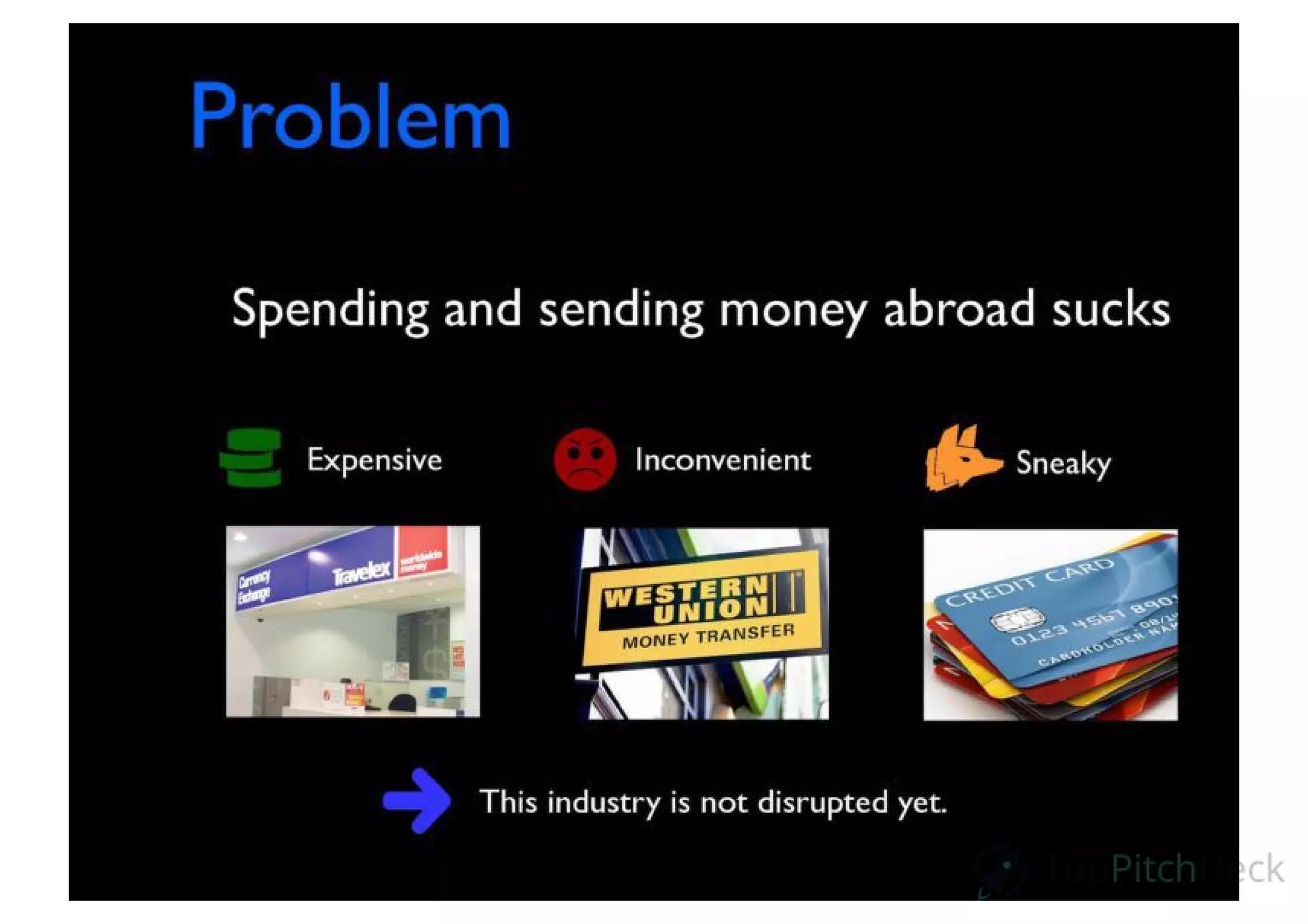
Slide 2 states the problem plainly: "Spending and sending money abroad sucks," then breaks it into three emotional pain points — expensive, inconvenient, sneaky — with familiar brand imagery (Travelex, Western Union, credit cards). This combination of a blunt headline plus visual archetypes quickly makes the issue relatable to anyone who travels or sends money internationally.

Founders should emulate this clarity: lead with a short, memorable statement of customer pain, then back it up with familiar examples and emotional labels. Doing so primes investors to understand why the solution matters and creates a straightforward thread to demonstrate how your product solves each pain point.

Key Takeaway: Lead with one crisp problem sentence and use visuals + emotional labels to make the pain instantly relatable.
Market Size: Quantify Opportunity Concretely

Market Size: Quantify Opportunity Concretely

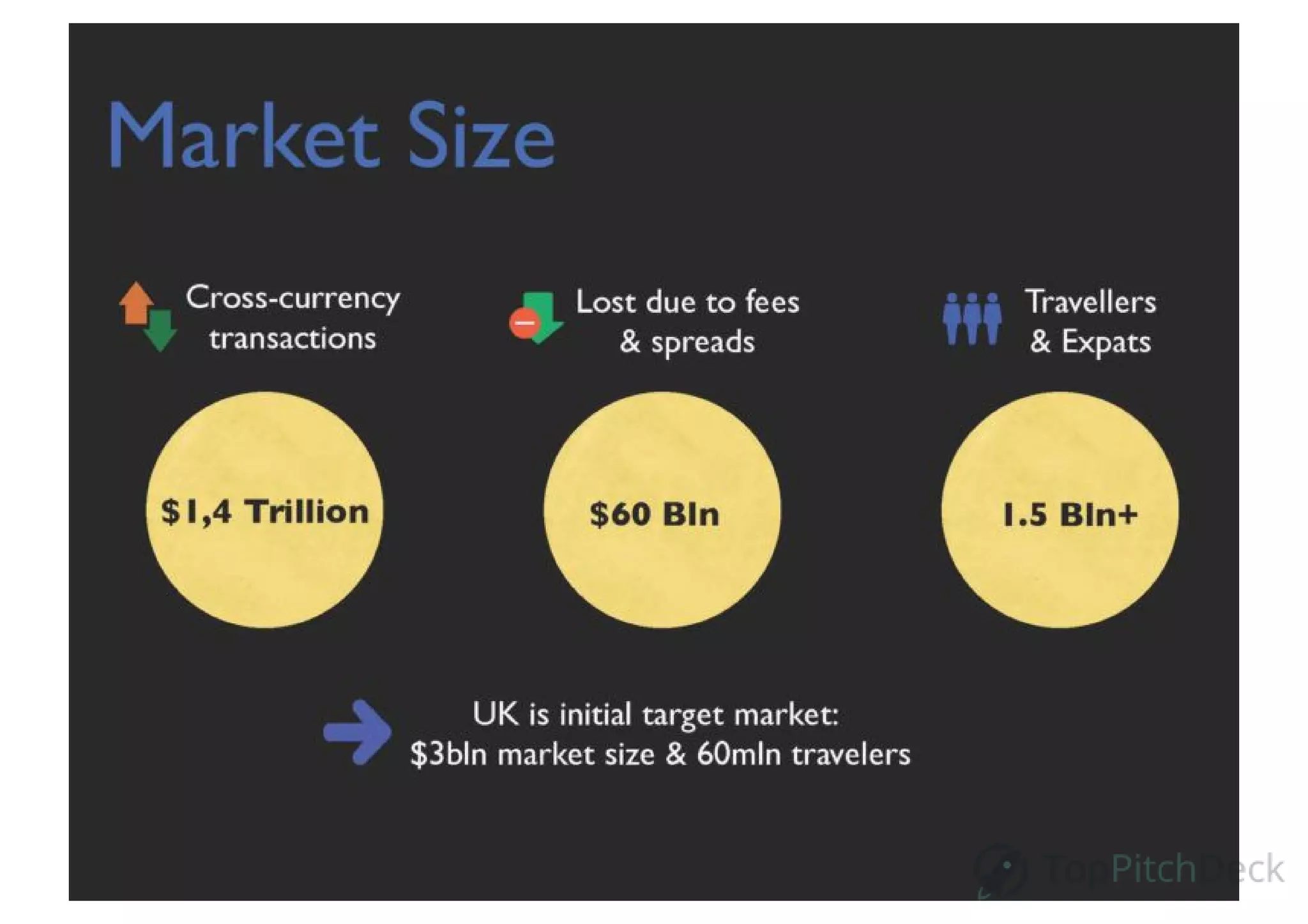
The market slide (Slide 3) quantifies the opportunity with three simple circles: $1.4T cross-currency transactions, $60B lost to fees/spreads, and 1.5B travelers/expats — then narrows to the UK initial target ($3B market and 60M travelers). This structure moves from global TAM to a specific, credible beachhead, which helps justify early traction plans and the ask.

Founders should mirror this approach: present a big-picture number to show upside, then show a realistic initial target market where you can enter and scale. Highlighting the money lost to incumbent inefficiencies (fees/spreads) is especially persuasive for fintechs because it ties user pain to concrete economic value.

Key Takeaway: Show both the large upside and a concrete initial beachhead: big TAM + a realistic first market equals credibility.
Solution & Product: Demonstrate Flow and Simplicity

Solution & Product: Demonstrate Flow and Simplicity

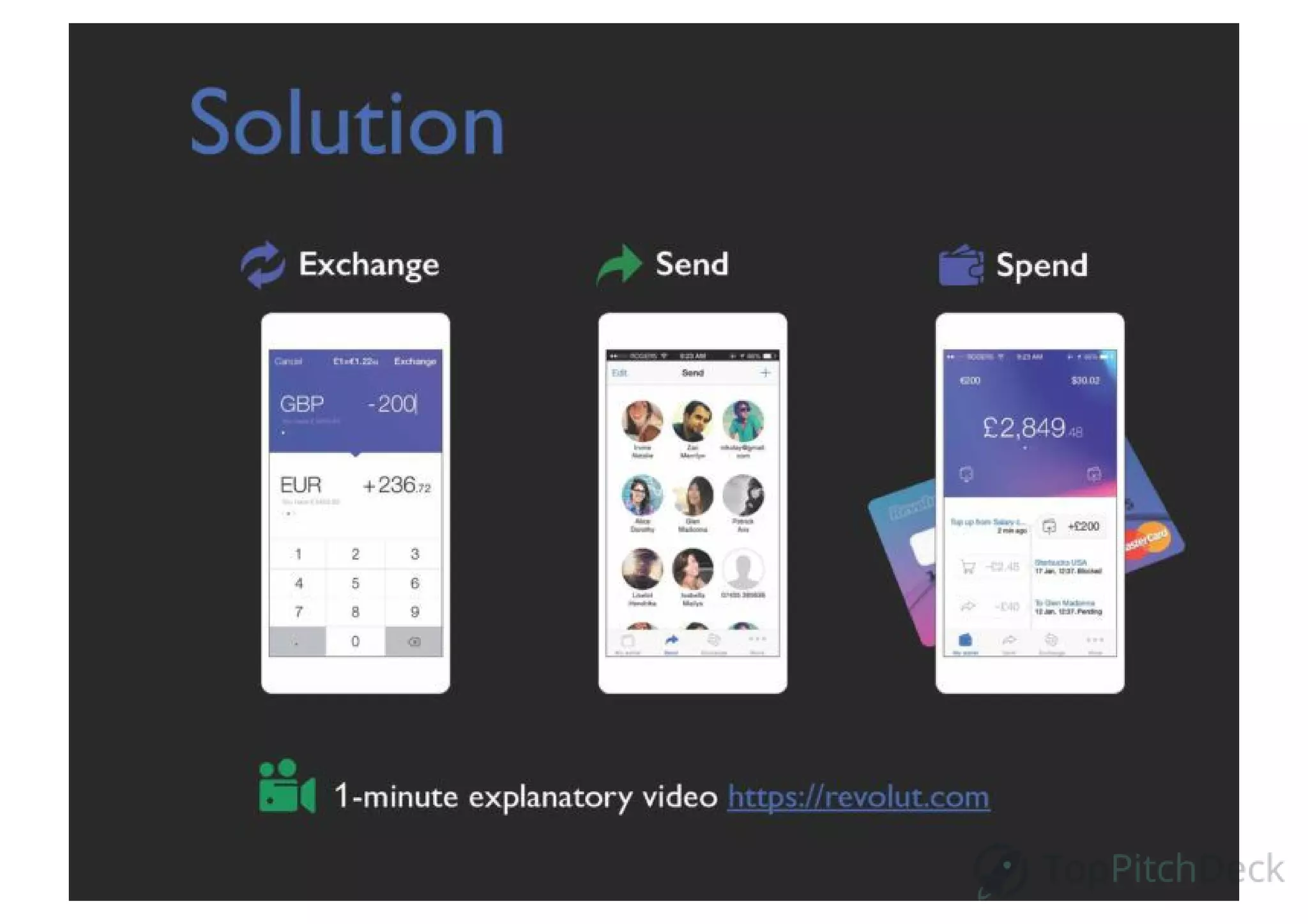
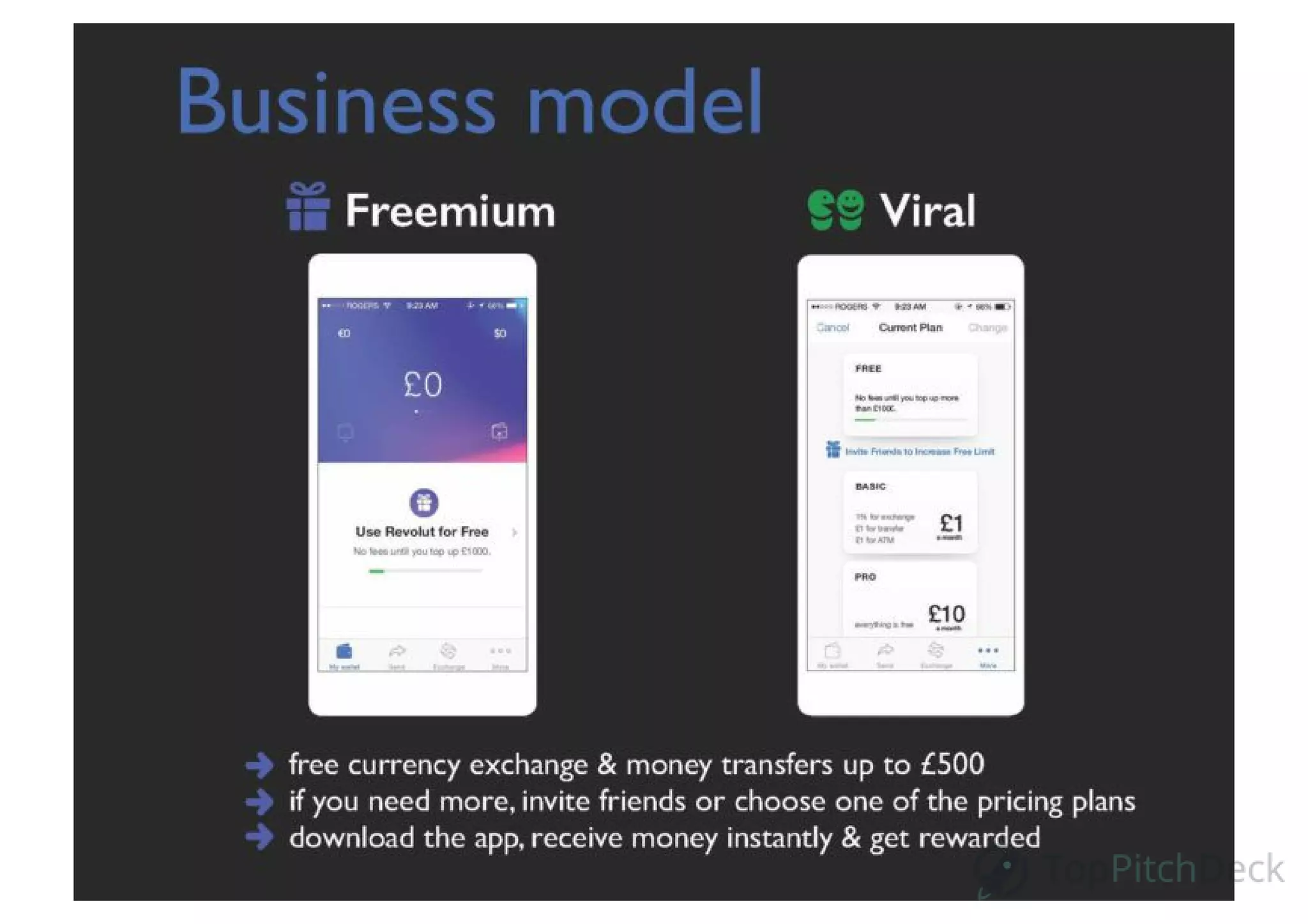
Slides 4 and 5 (Solution and Business Model) focus heavily on product flow: exchange, send, spend — each illustrated with phone screenshots — and then show the freemium/viral pricing tiers. The product is shown doing the exact things the problem described, closing the loop between pain and remedy. The UI screenshots make the solution tangible and help investors picture user experience and onboarding.

The second slide ties product to monetization: free exchange up to a threshold, invites to increase limits, and paid tiers. That alignment (simple product + clear monetization mechanics) is a model for early-stage decks: show how users experience value and how the company can capture value without confusing or numerous revenue lines.

Key Takeaway: Use real product screenshots to map features directly to stated pains, and pair that with a simple, understandable revenue model.
Go-to-Market & Positioning: Viral + Community Focus

Go-to-Market & Positioning: Viral + Community Focus

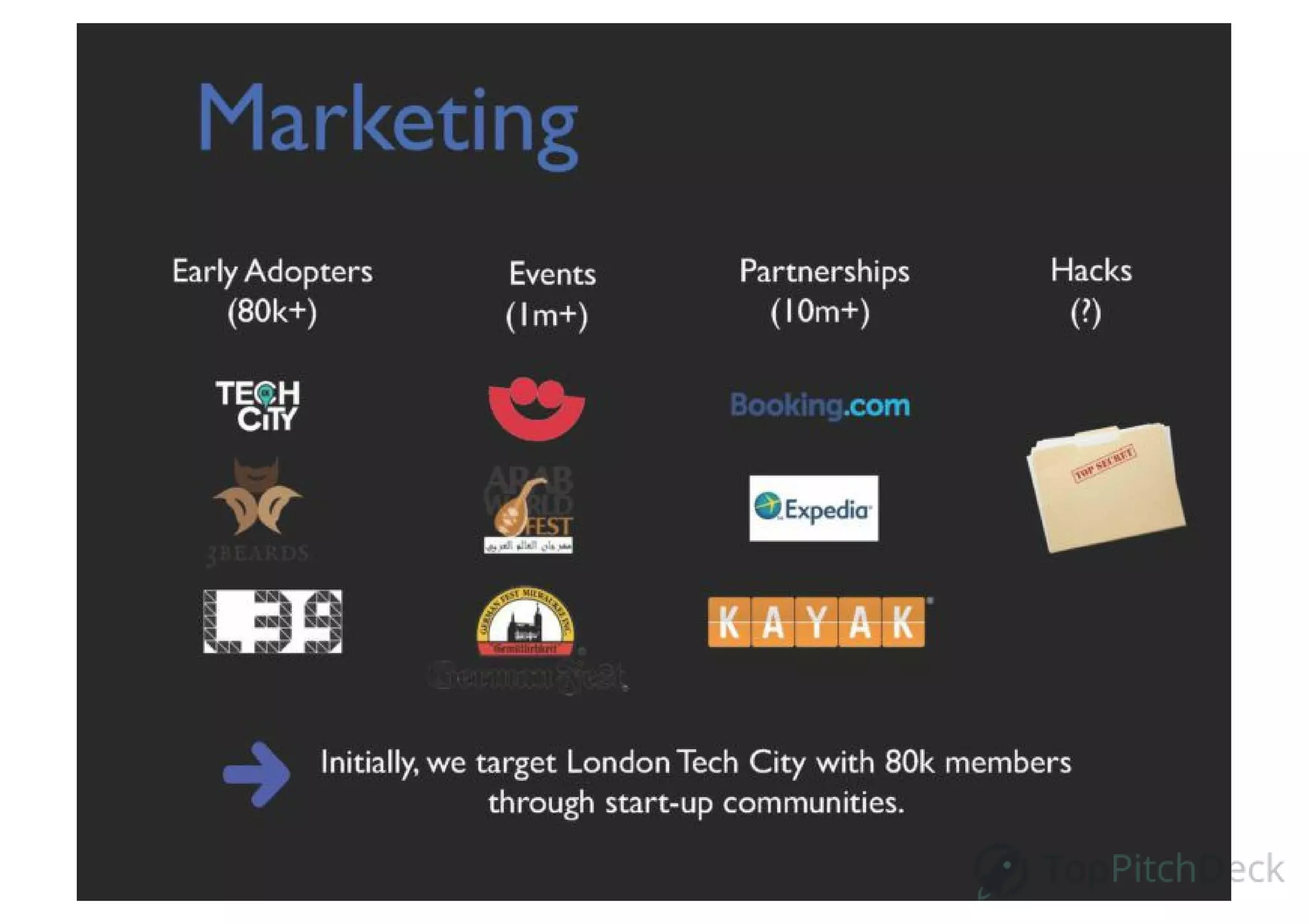
The marketing slide outlines a layered GTM: target early adopters in startup communities (London Tech City), events, partnerships (Booking, Expedia, Kayak), and viral hacks. This demonstrates a thoughtful, low-cost acquisition strategy leveraging partnerships and communities where frequent travelers congregate. The emphasis on specific channels and early communities signals that growth is deliberate, not accidental.

Effective GTM sections in seed decks should specify target segments, concrete channels, and partnerships that can move the needle early. Revolut’s deck does this by naming partners and communities rather than vague marketing platitudes, which improves credibility and suggests measurable KPIs for traction.

Key Takeaway: Detail specific acquisition channels and partners that match your target user behaviors and show how you’ll scale affordably.
Traction: Early Signals and Credibility

Traction: Early Signals and Credibility

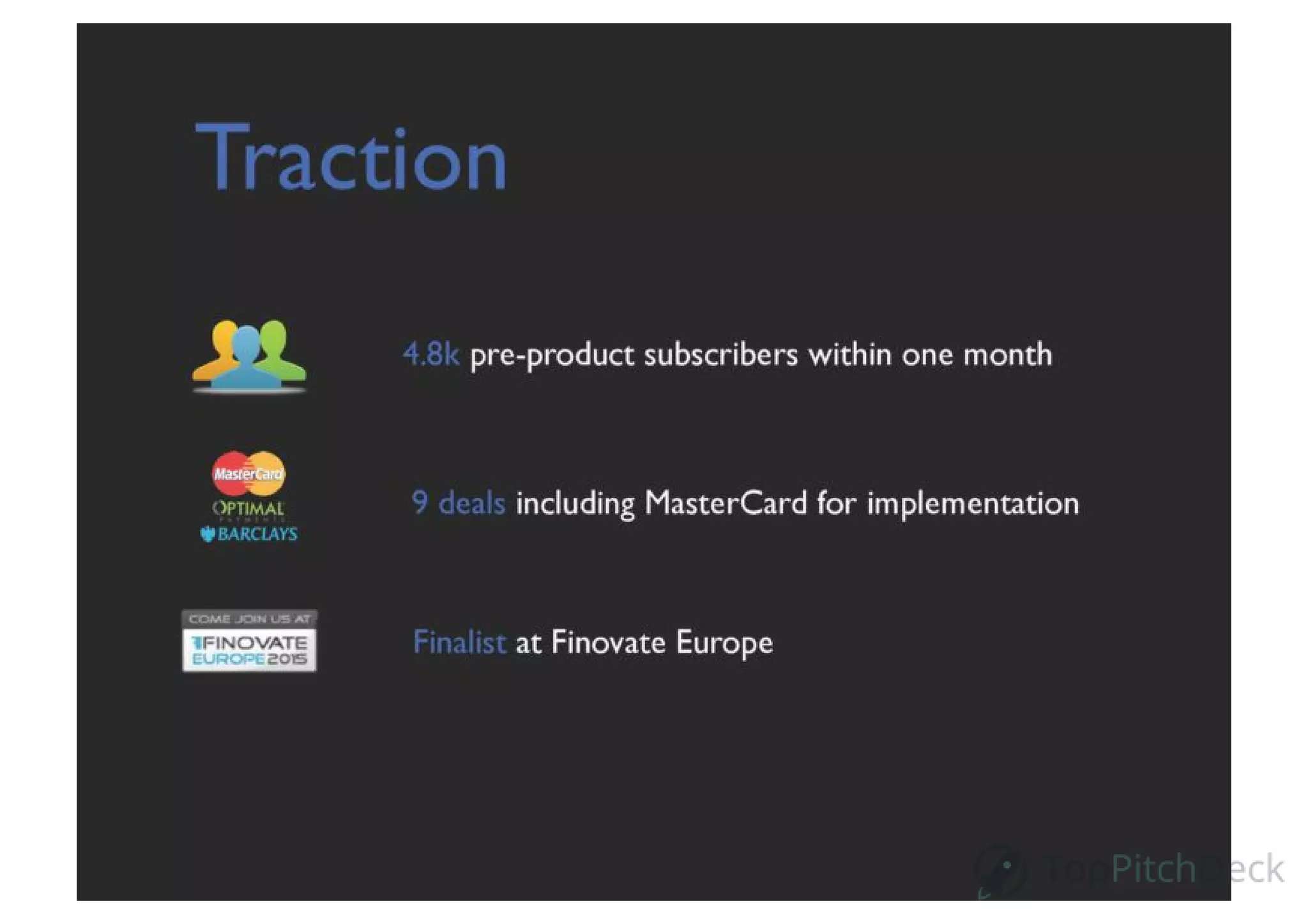
The traction slide highlights 4.8k pre-product subscribers in one month, nine deals including MasterCard for implementation, and a Finovate finalist spot. These are high-signal early metrics: signups, strategic technology/partner deals, and industry recognition. They don’t overclaim but provide concrete indicators that product-market fit is emerging and that partners take the solution seriously.

For founders, show a mix of user demand metrics (users/subscribers), business development progress (partners/deals), and third-party validation (competitions, press) to build credibility. Investors look for evidence that other stakeholders — users, partners, and industry peers — see value in the product.

Key Takeaway: Present a balanced set of early evidence: user interest, strategic partnerships, and third-party validation to reduce perceived execution risk.
Ask & Use of Funds: Specific and Actionable

Ask & Use of Funds: Specific and Actionable

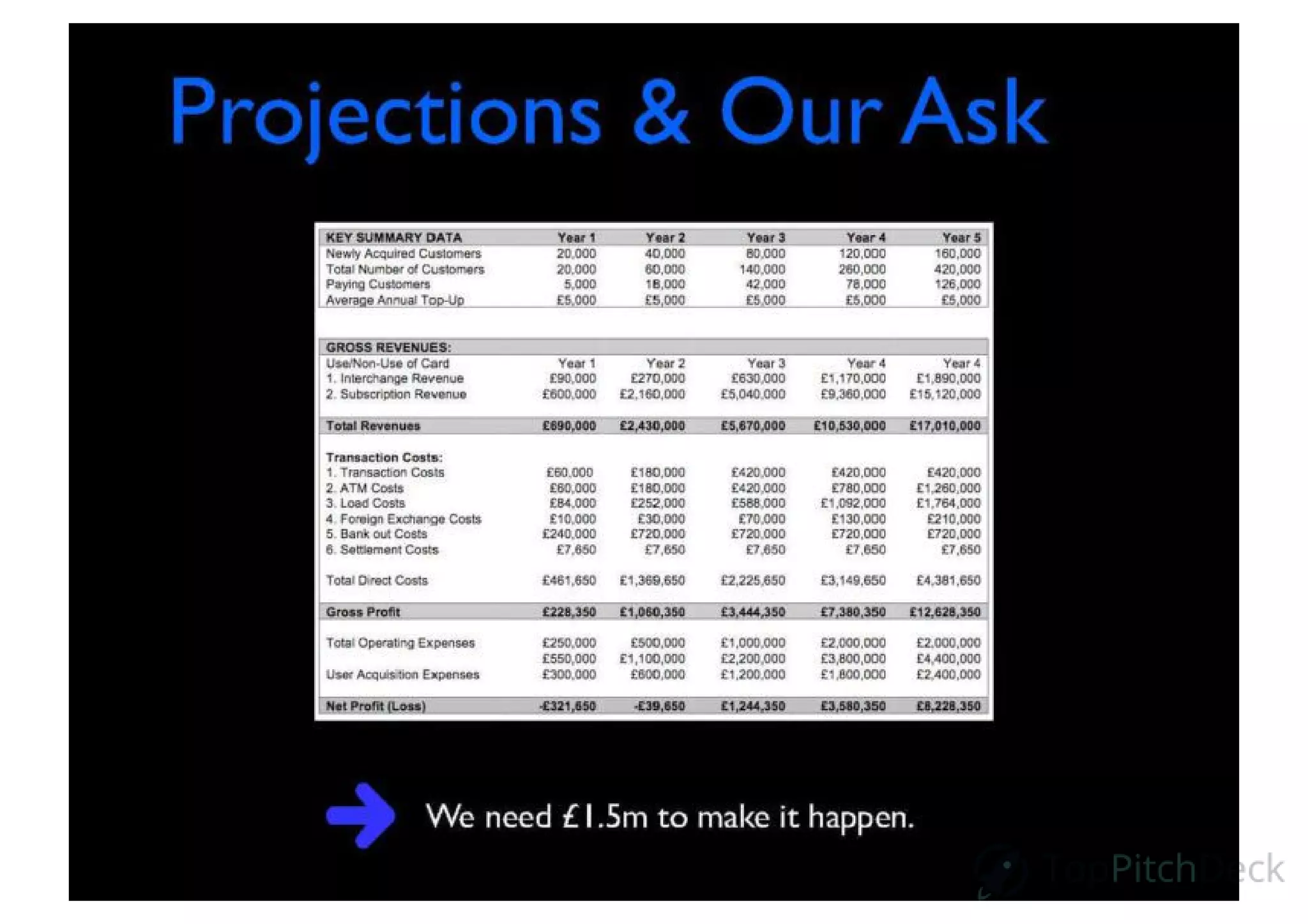
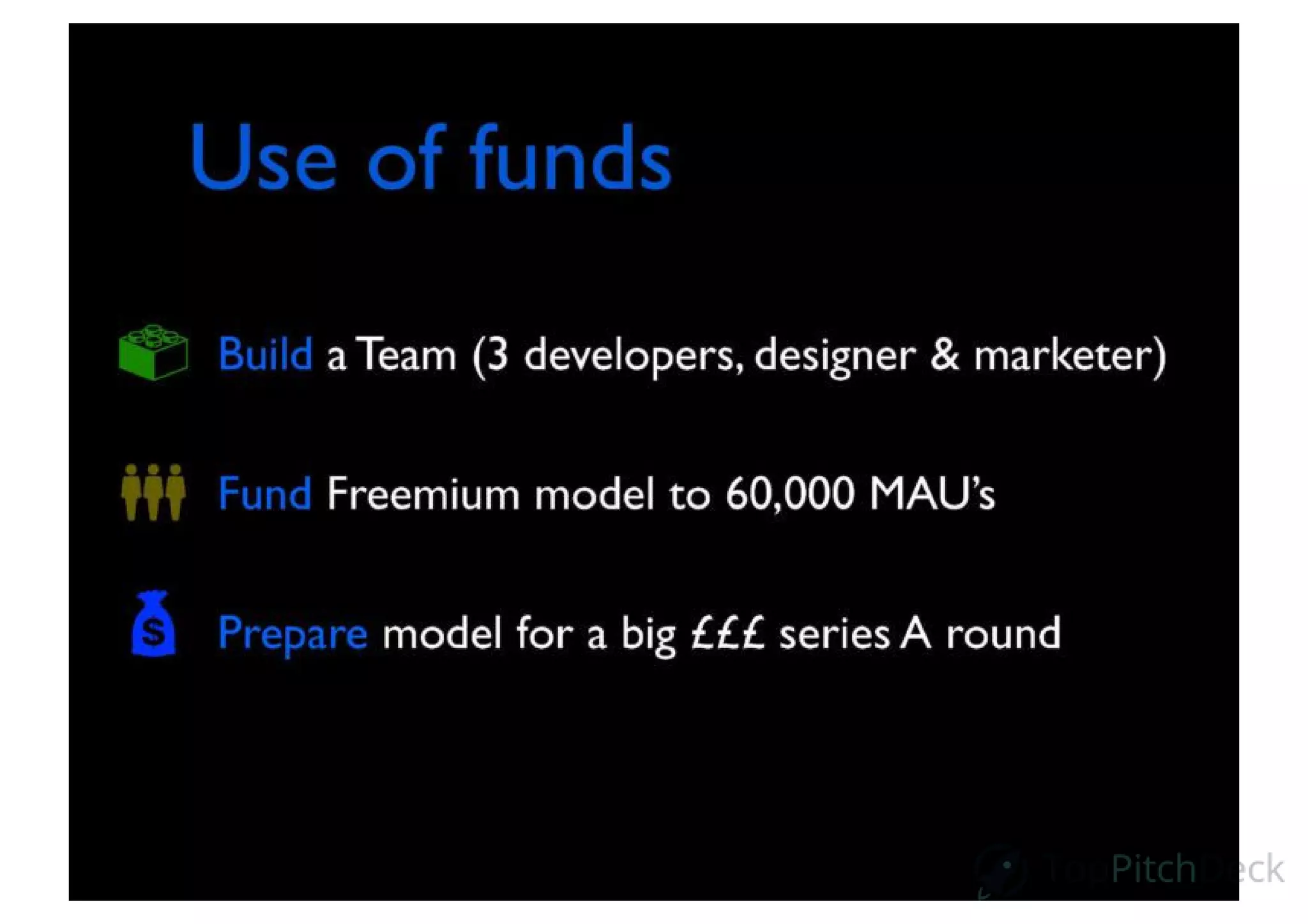
The projections and ask slide says "We need £1.5m to make it happen" and includes a financial summary; the use-of-funds slide breaks down hires (3 developers, designer, marketer), funding the freemium model to 60k MAUs, and preparing for Series A. This is effective because the ask maps directly to milestones and resources — hires and marketing — and ties expenditure to a clear growth target (60k MAU), making it easier for investors to assess runway and dilution.

Seed-era asks should be specific, linked to milestones, and show how the capital will derisk the next funding round. Revolut’s deck demonstrates this: a modest amount, a clear hiring plan, a user target, and a stated Series A preparation goal provide a sensible roadmap that investors can evaluate.

Key Takeaway: State a concrete ask tied to hires and measurable milestones so investors can see exactly what their capital will accomplish.

Conclusion: Key Lessons

This deck succeeds through clarity, focus, and economy: a one-line problem statement, quantified market, product screenshots showing the exact solution, a simple freemium/viral monetization path, early traction signals, and a specific use of funds and ask. Its consistent visual language and disciplined slide count keep attention on the core narrative — pain → product → market → traction → ask.

Actionable advice for founders: 1) Lead with a concise, emotionally resonant problem and connect every slide back to that problem; 2) Quantify both big upside and a realistic beachhead; 3) Use real product images to make benefits tangible; 4) Show early validation from users and partners; and 5) Request an amount tied to hires and measurable milestones so investors can easily judge the investment rationale.