Stack up against Leapsome

Compare Your Deck

Leapsome's 2022 Pitch Deck

SaaS
Stage: Series A
Raised: $60M
Year: 2022
Slides: 19
Outcome: Private, valued at $400M+

Pitch Deck

1 / 19
Slide 1
Click to expand

Deck Analysis

This pitch deck for Leapsome (Series A) positions the company as a one-stop people enablement platform combining performance management, engagement, and development tools. The deck is concise, visually clean, and focused on demonstrating product breadth (reviews, goals/OKRs, surveys, feedback, 1:1s, learning) plus market opportunity and traction. Notable elements include a problem-first framing (employee churn), clear product-module visuals, customer logos, growth metrics, and differentiators like GDPR/EU data security — all presented in a way that supports a SaaS growth narrative.

Cover & Value Proposition

Cover & Value Proposition

The opening slide (slide 1) is simple and direct: brand, tagline (“We help teams grow and succeed”), and short positioning (“The One-Stop People Enablement Platform”). This immediately communicates the mission without clutter and sets the expectation that the deck will explain how the product supports team growth across people processes. The minimalist design, with a faint product screenshot in the background, signals product-driven credibility while keeping the focus on the core message.

For founders: a clear, short value proposition on the first slide helps an investor decide quickly if the deck is relevant. The cover balances brand, mission, and product hinting — an effective pattern for SaaS companies selling to HR and C-suite buyers because it ties emotional benefit (teams succeed) to a practical promise (one platform).
Key Takeaway: Lead with a concise value statement that combines the emotional outcome and the product role — keep the cover uncluttered and product-hinted.
Problem Framing: Core Drivers of Success

Problem Framing: Core Drivers of Success

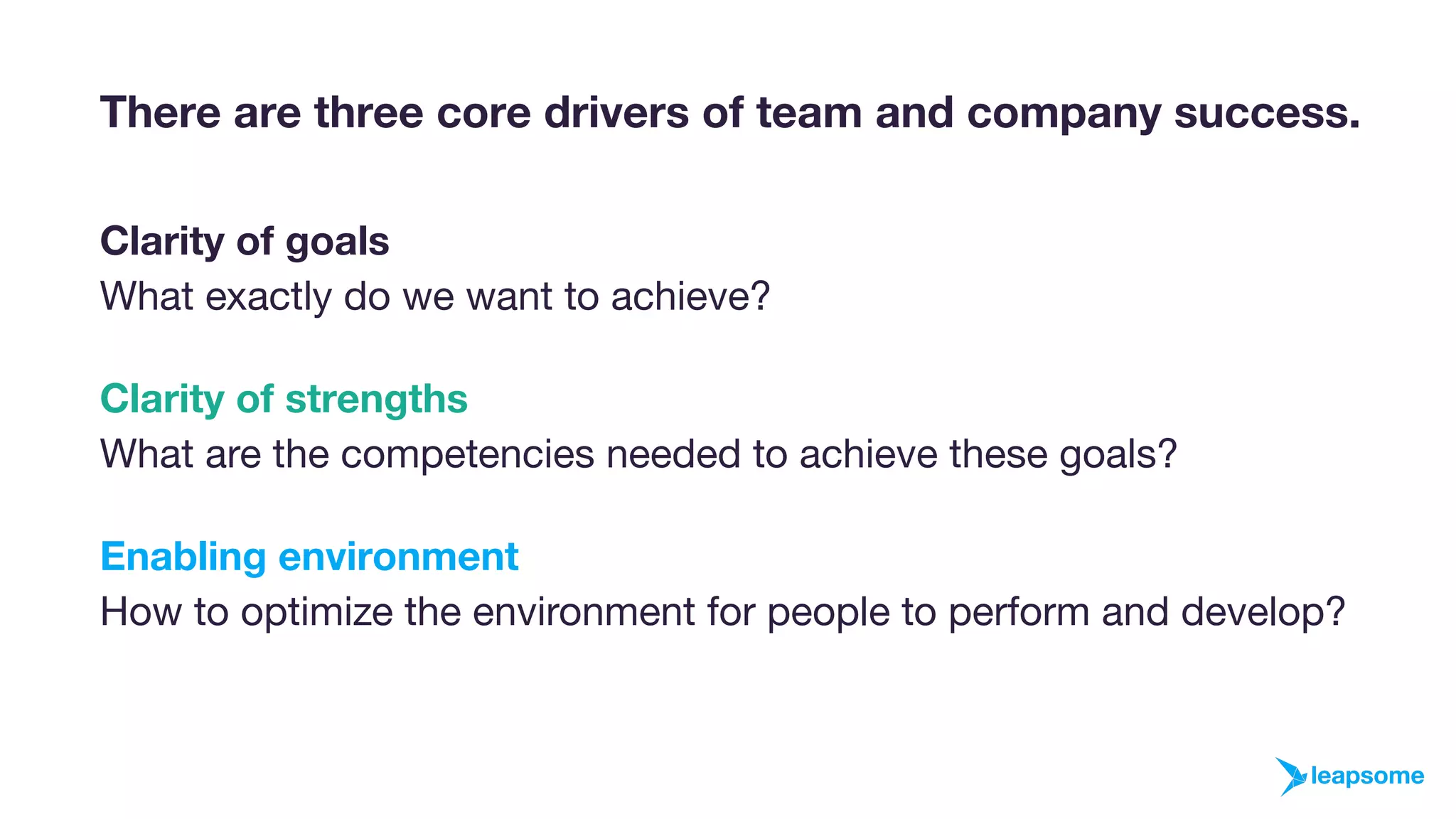
Slide 3 articulates three core drivers of team and company success: clarity of goals, clarity of strengths, and an enabling environment. This framing is effective because it translates a broad HR problem into three actionable dimensions that map directly to product modules. It prepares the audience to see the product as a holistic solution rather than a point tool — a key positioning for winning enterprise buyers who prefer integrated platforms.

Founders should note the cognitive clarity: an explicit problem decomposition makes it easier to align metrics, product features, and customer pain points later in the deck. It also primes investors to judge product-market fit by whether features map cleanly to these drivers.

Key Takeaway: Break the problem into a small number of clear, product-mapped drivers to make it easy for investors to see how your features solve a coherent set of needs.
Why It Matters: Cost of Churn & Risk

Why It Matters: Cost of Churn & Risk

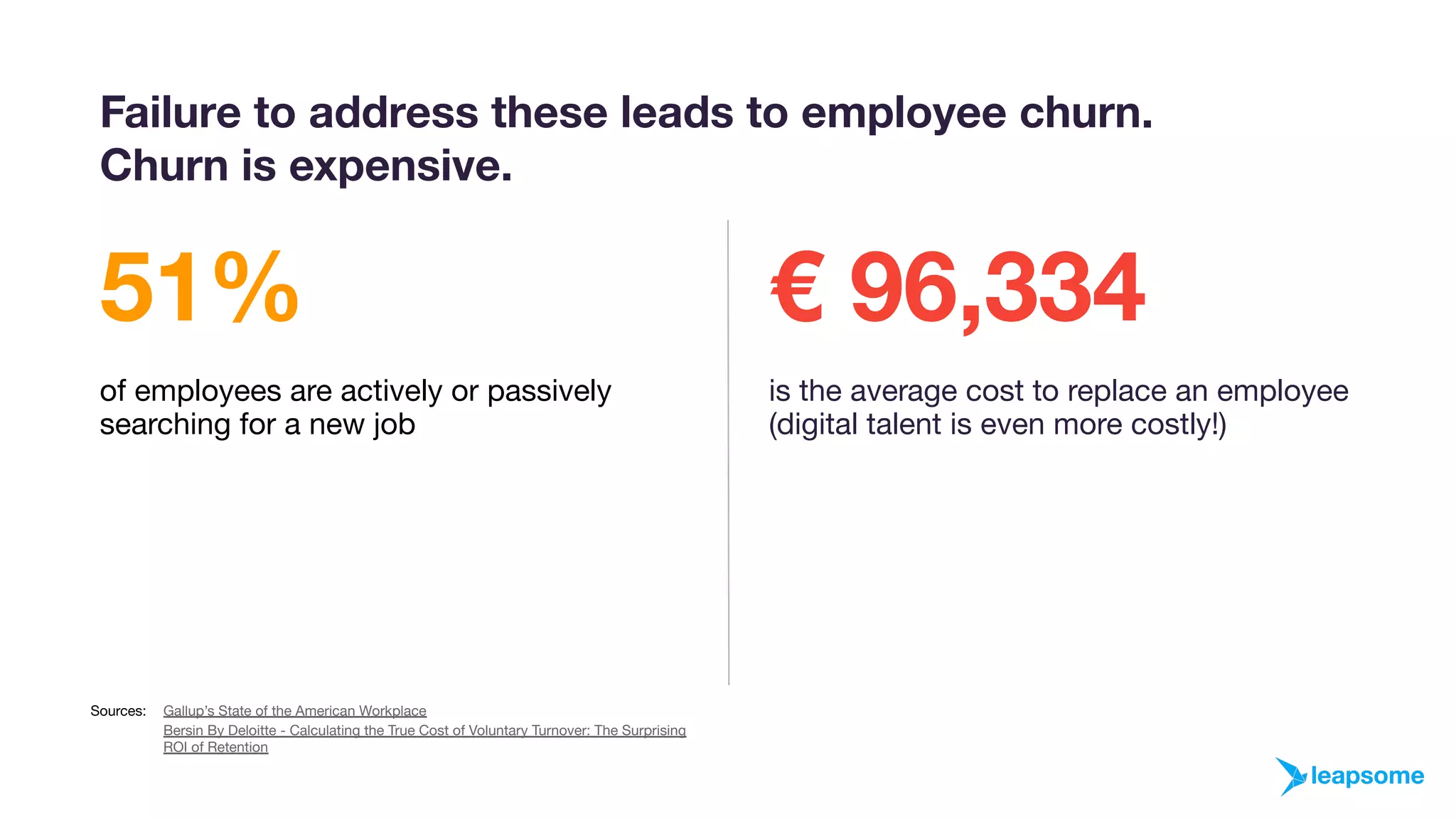
Slide 4 quantifies the problem with two strong data points: 51% of employees are searching for a new job and the average cost to replace an employee (presented in euros). Using a mix of engagement and expensive replacement cost creates urgency — showing both behavioral intent and a financial hit. The slide is visually sparse but uses large, contrasting numbers to ensure the stats land immediately.

This is a classic investor-oriented move: tie product benefits to economics. For founders, include sourced, high-impact stats and connect them to the ROI of your solution (retention, productivity) so that investors can more easily model customer payback and enterprise ROI.

Key Takeaway: Use one or two powerful, sourced metrics to quantify the problem and create investor-calculable urgency tied to customer economics.
Product Overview: Integrated Modules

Product Overview: Integrated Modules

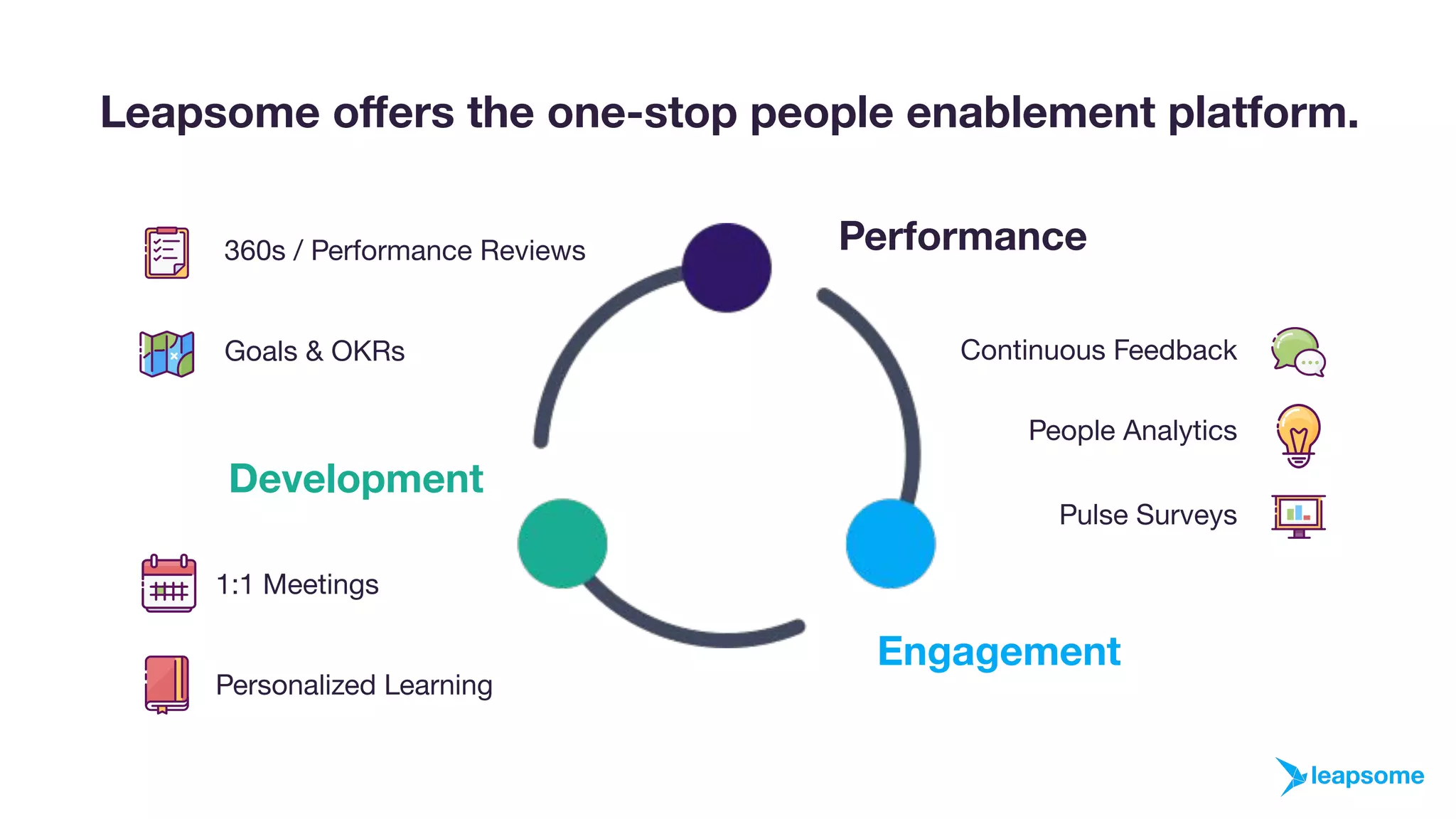
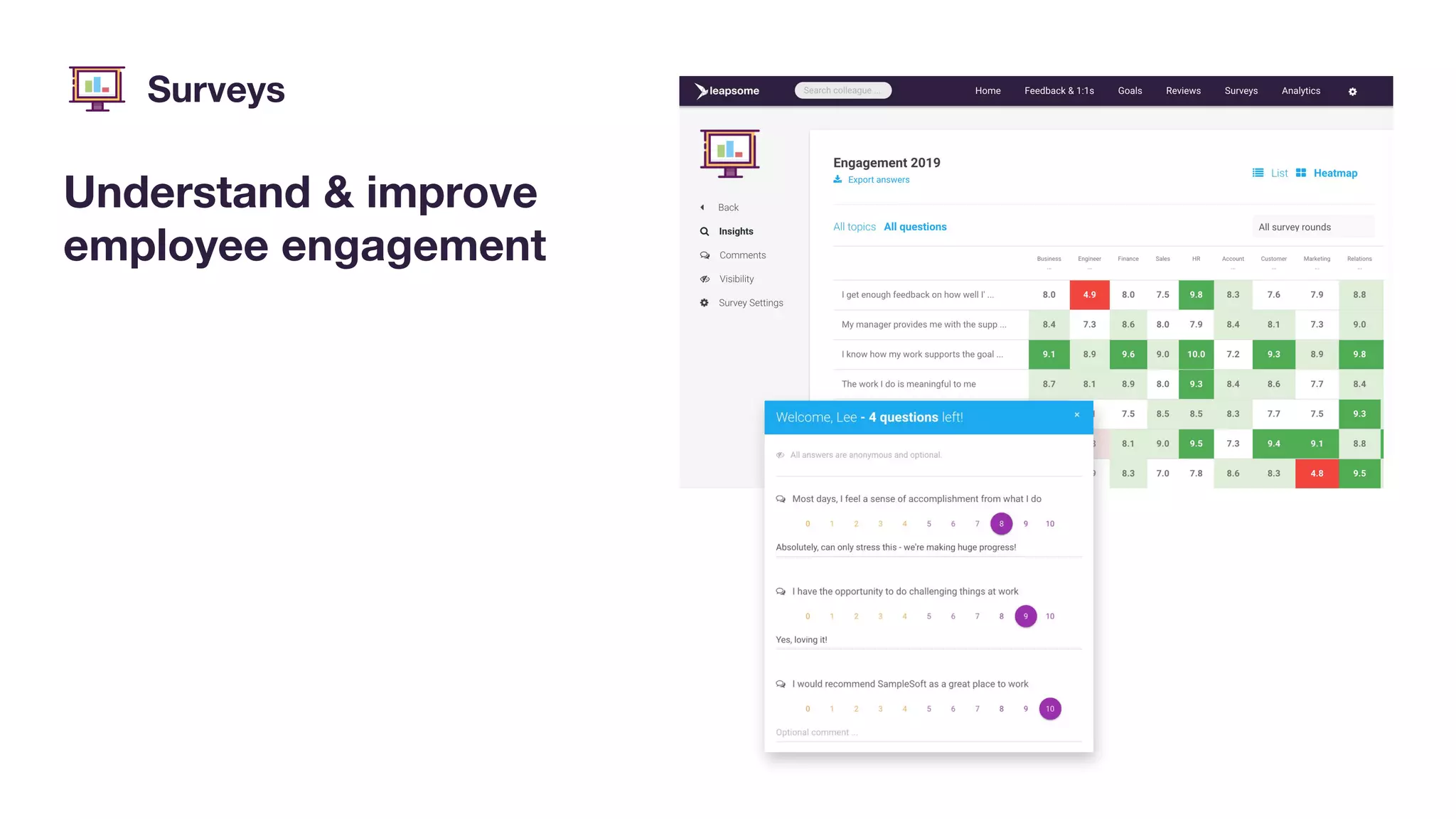
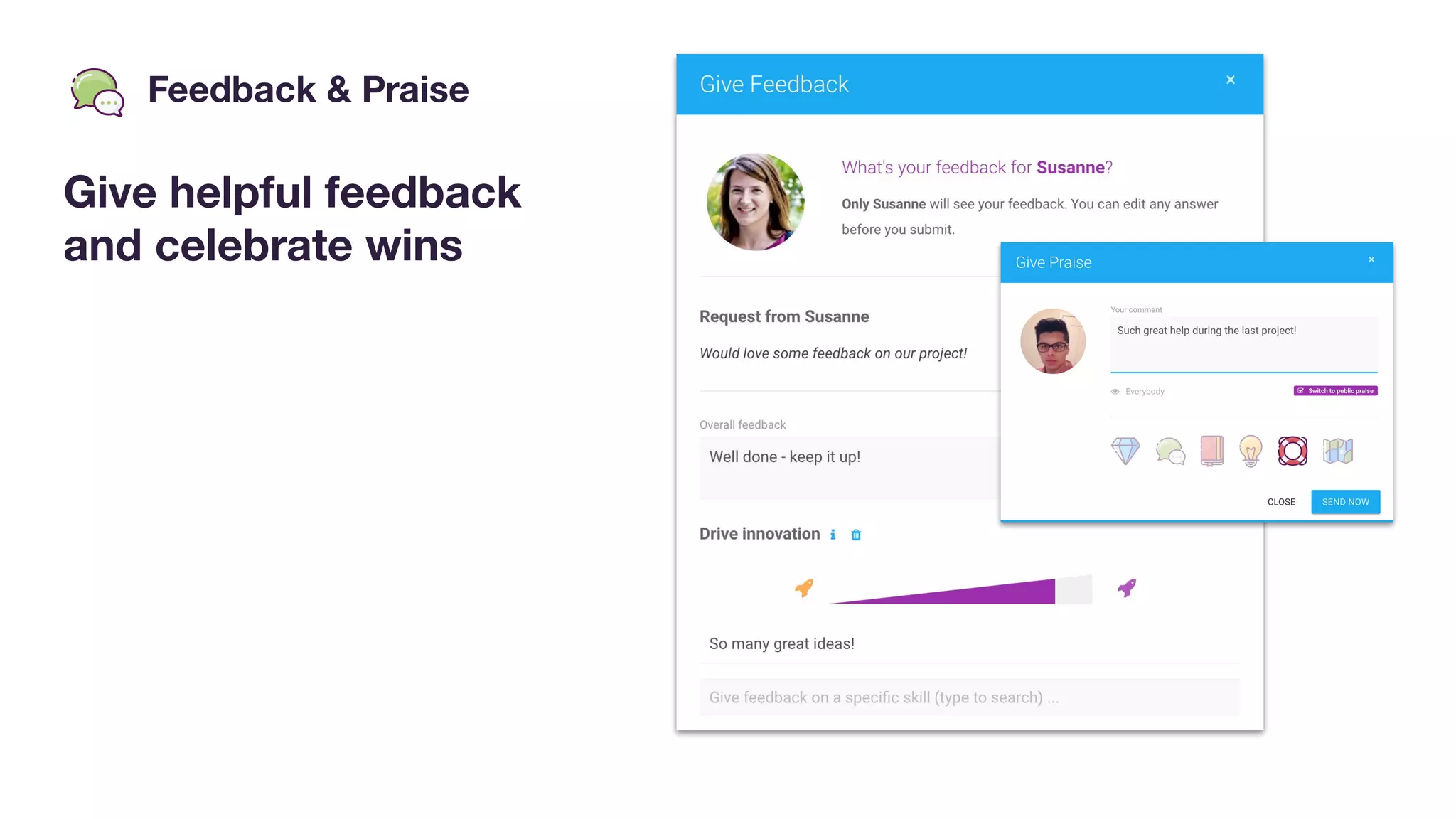
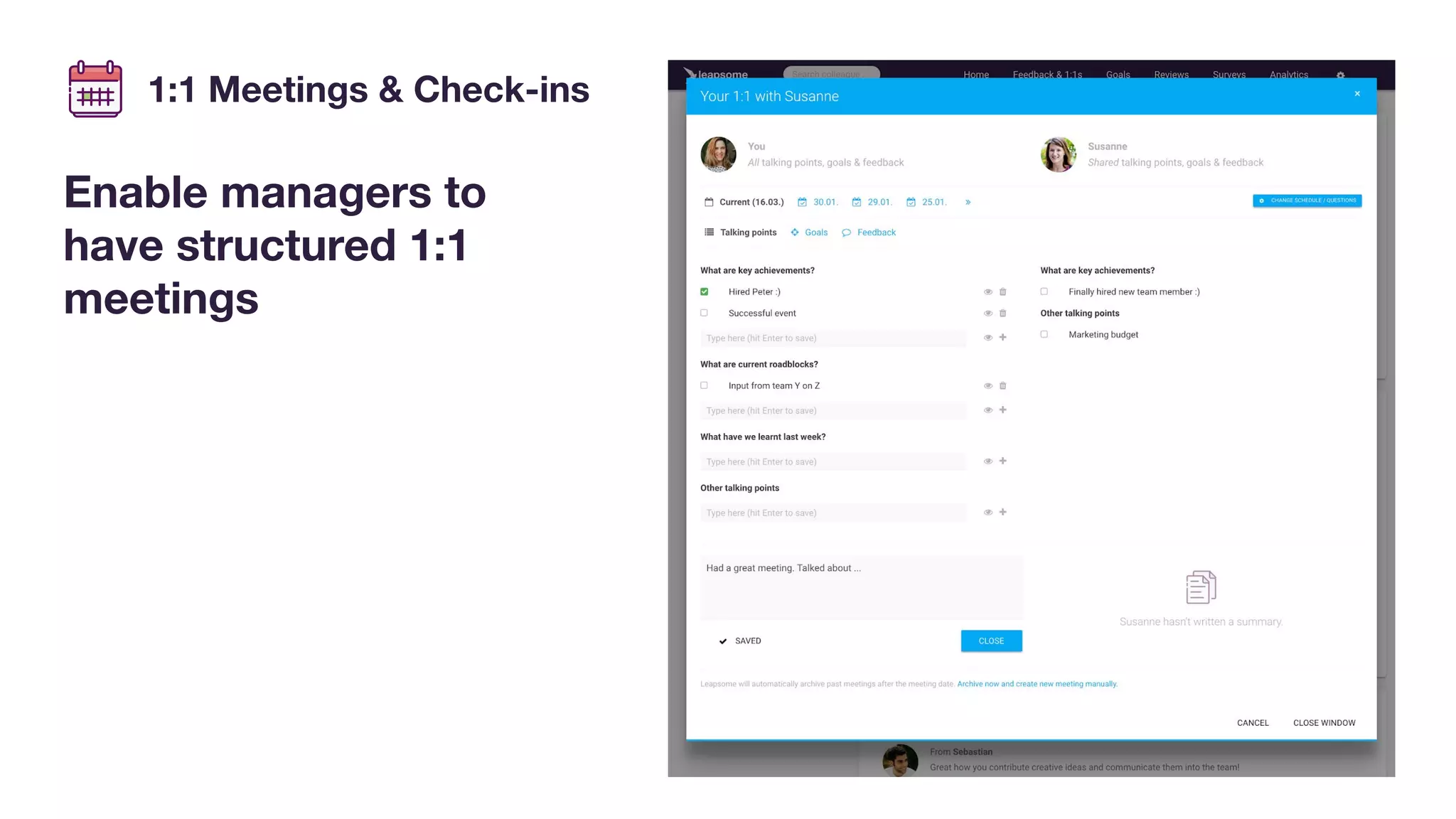
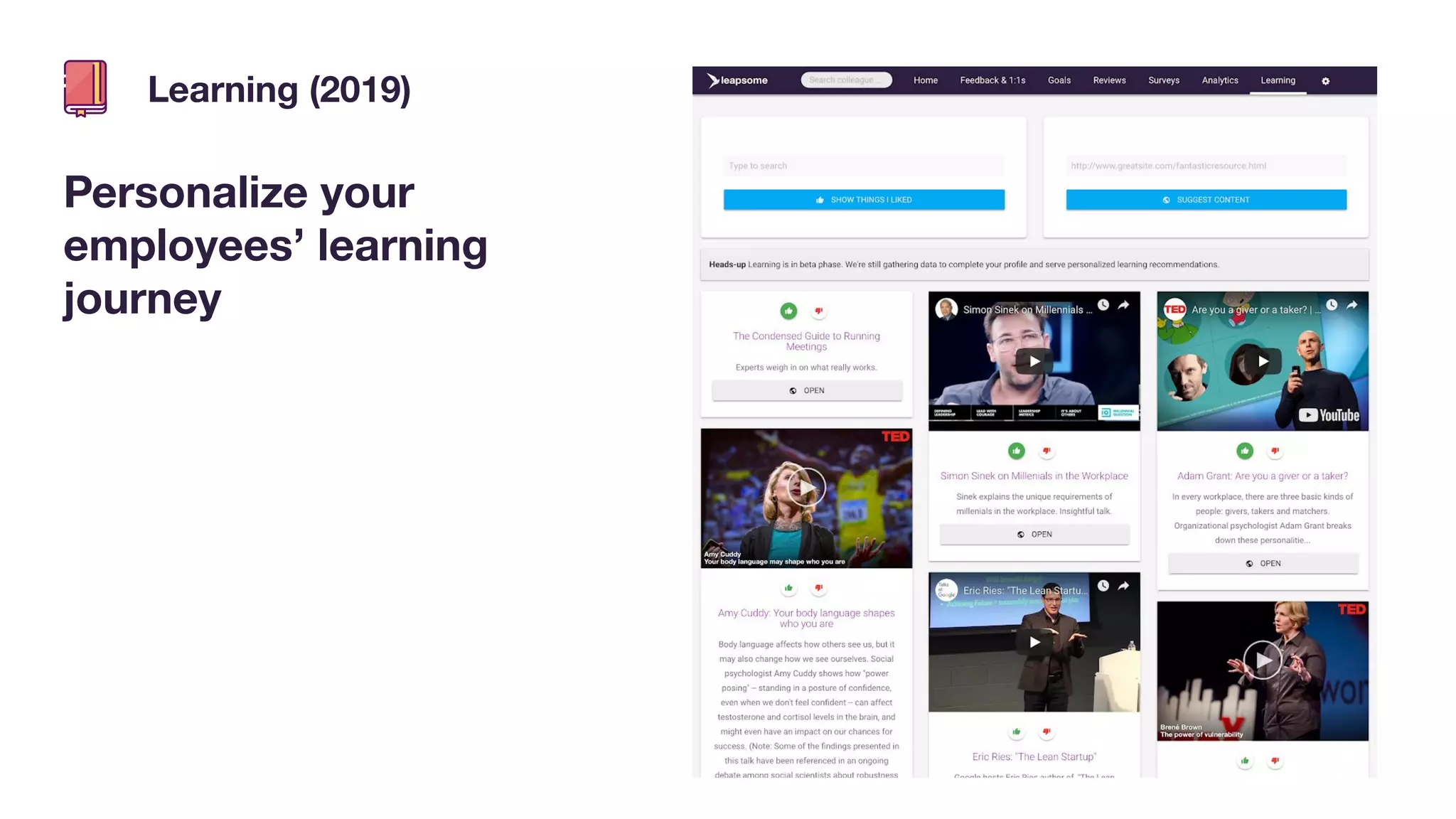
Slide 5 presents the product as a cycle of Performance, Engagement, and Development with specific modules listed around the circle (reviews, goals & OKRs, feedback, people analytics, pulse surveys, 1:1 meetings, learning). The visualization emphasizes continuity — that data and workflows flow between modules — which supports the one-stop platform claim. Icons add personality and make the functional list easier to scan.

This section is effective because it translates the earlier problem drivers into concrete product capabilities. Founders should emulate this by mapping features to the customer journey and showing how modules interlock; integrated value beats best-of-breed claims when selling to HR functions seeking consolidation.

Key Takeaway: Show how discrete features form an integrated workflow rather than a set of isolated tools — a visual product map sells platform value to enterprise buyers.
Product Depth: Example — 360s & Reviews

Product Depth: Example — 360s & Reviews

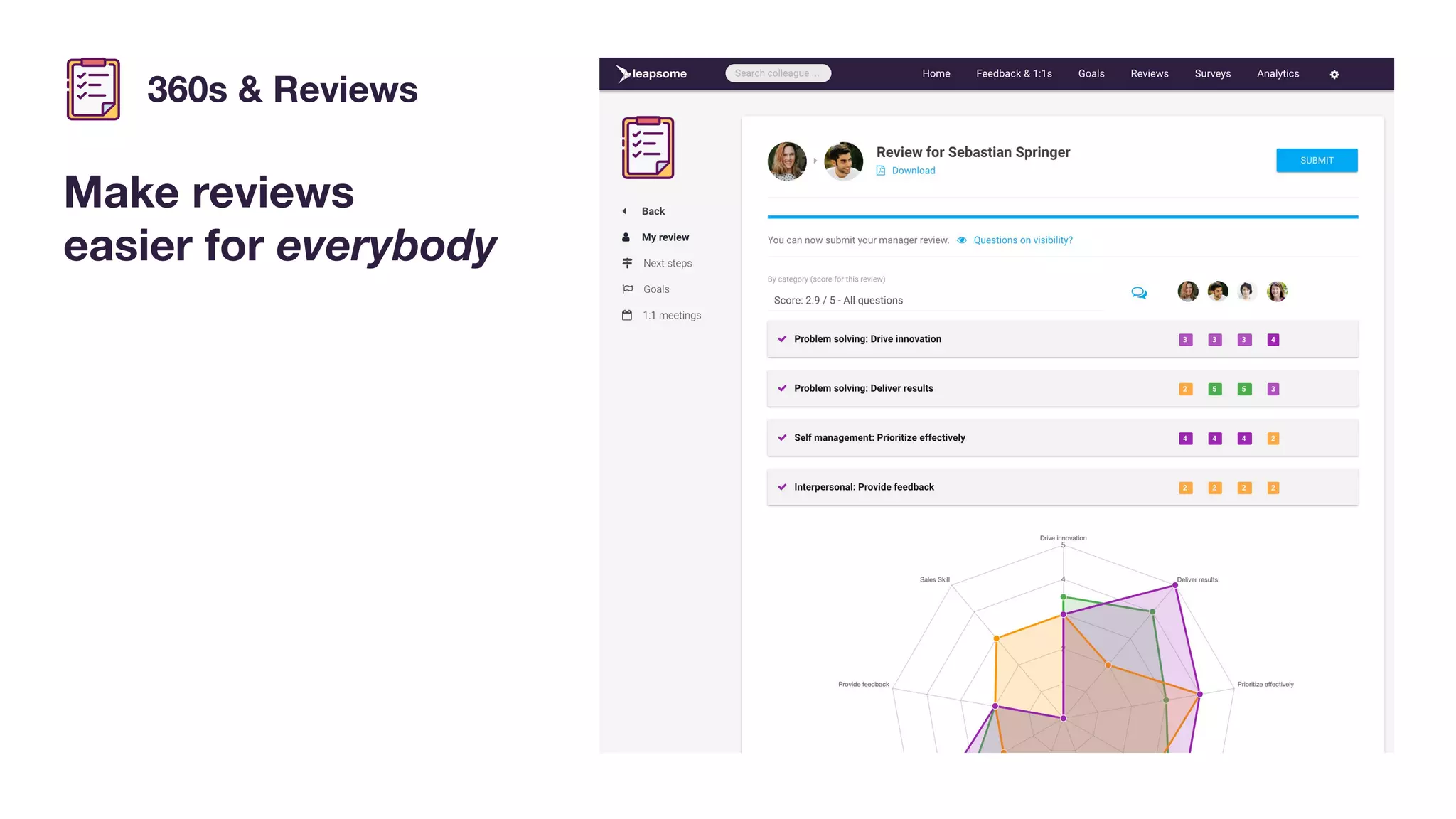
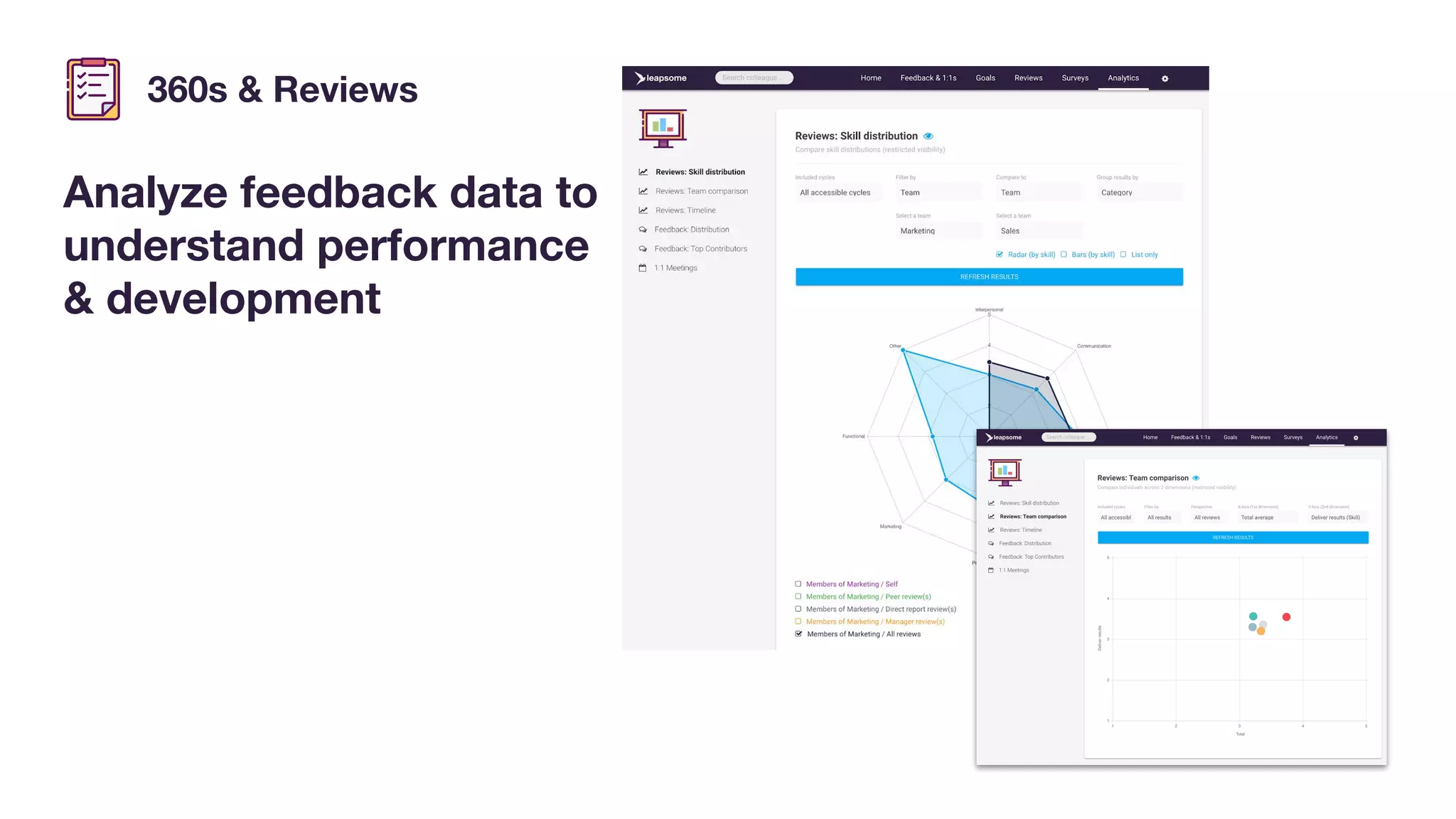
Slides 6 and 7 (using slide 06 URL) dive into a specific module — 360s and performance reviews — with screenshots that highlight ease of use, radar visualizations, and analytics for team comparison. These visuals demonstrate both end-user UX (simple, clean review flows) and admin analytics capability (skill distribution, team comparison). Showing a representative, polished workflow helps buyers and investors imagine adoption and scale.

For founders: include at least one deep-dive screenshot that shows both the front-end user experience and the backend analytics. It establishes credibility that the product is production-ready and that the company has thought through data capture and reporting — two critical requirements for enterprise purchasing and retention.

Key Takeaway: Include a product deep-dive screenshot that proves the UX and data/analytics capabilities — this builds credibility for enterprise adoption.
Differentiation & Security Positioning

Differentiation & Security Positioning

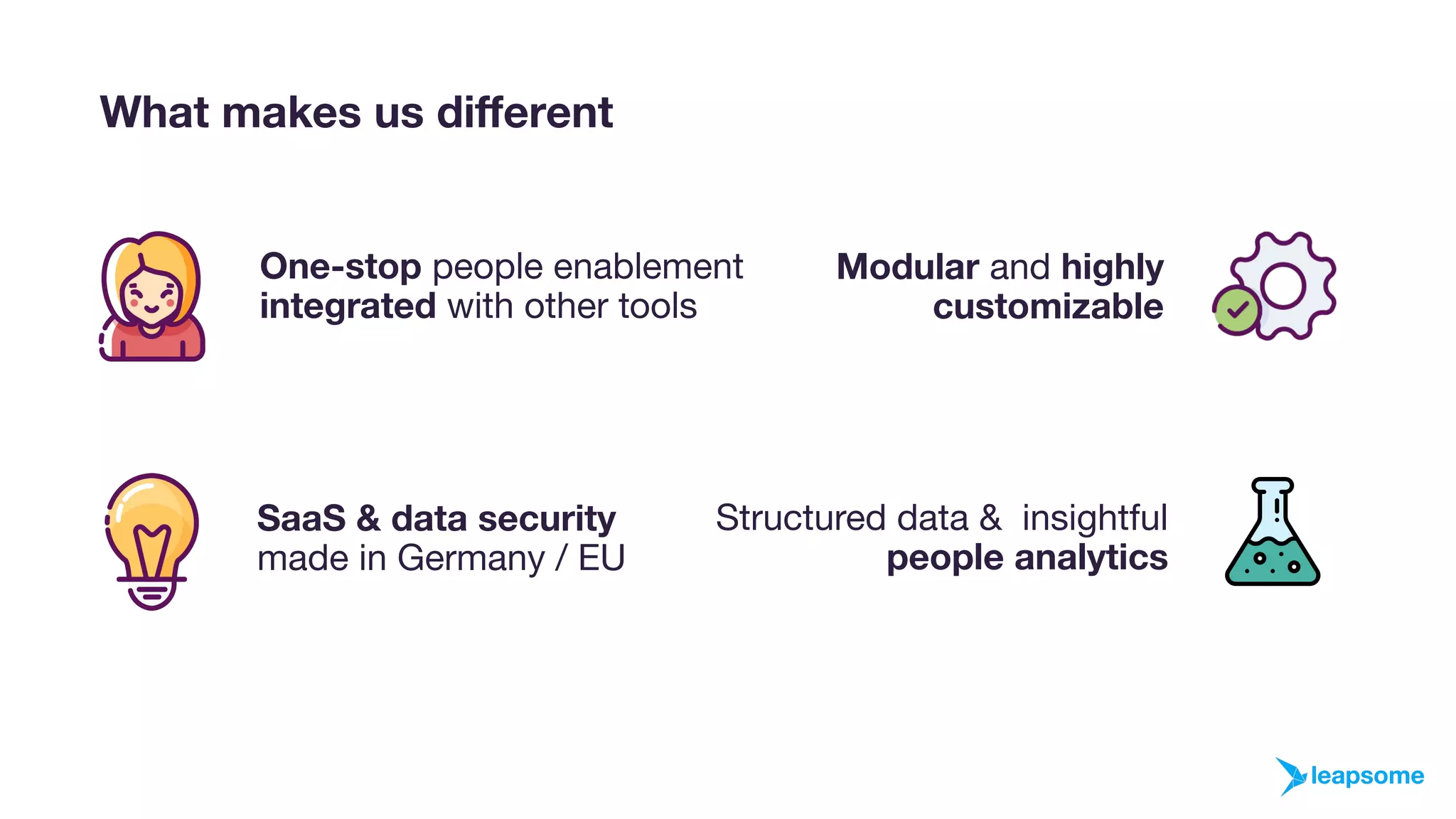
Slide 15 lists what makes Leapsome different: one-stop platform integration, modular/customizable architecture, SaaS and EU data security, and structured people analytics. This combination addresses three buyer concerns: breadth (consolidation), flexibility (rollout/customization), and compliance (GDPR/EU hosting). Highlighting 'made in Germany/EU' and GDPR compliance is a strategic differentiator for EU enterprise customers and procurement teams.

Founders in HR SaaS should call out explicit differentiators beyond product features — compliance, data residency, and modular deployment models can be decisive in enterprise selection and justify pricing premiums or RFP inclusion.

Key Takeaway: Spell out non-obvious differentiators — compliance, deployment model, and analytics depth — because enterprises often buy on those factors, not just feature lists.
Traction: Growth Curve & Momentum

Traction: Growth Curve & Momentum

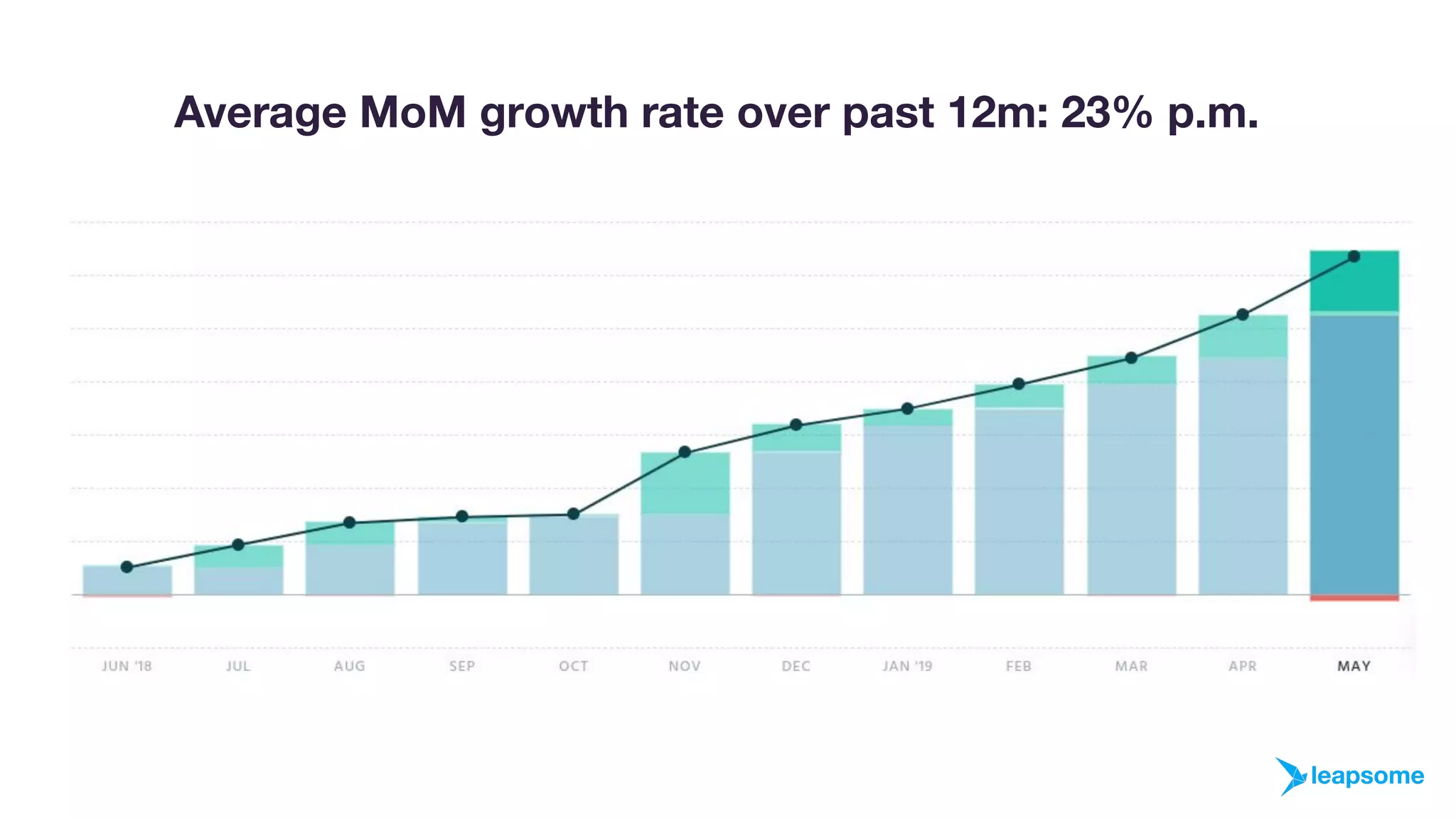
Slide 17 shows a clear upward MoM growth chart (average 23% month-over-month) with stacked bars and a trendline. This visual communicates momentum succinctly — a steep, sustained climb is one of the most persuasive things a growth-stage SaaS company can show. The chart lacks raw numbers on the slide, but the clear trend and labeling convey rapid adoption and compounding growth dynamics.

For founders: present growth visually with a simple chart and a concise, credible metric. Investors look for consistent acceleration and evidence that growth scales month-to-month. Accompany charts with a short caption explaining drivers (e.g., land-and-expand, channel expansion) in the spoken pitch or appendix.

Key Takeaway: Show sustained, accelerating growth visually and pair it with a brief explanation of the growth levers to make momentum believable and actionable for investors.

Conclusion: Key Lessons

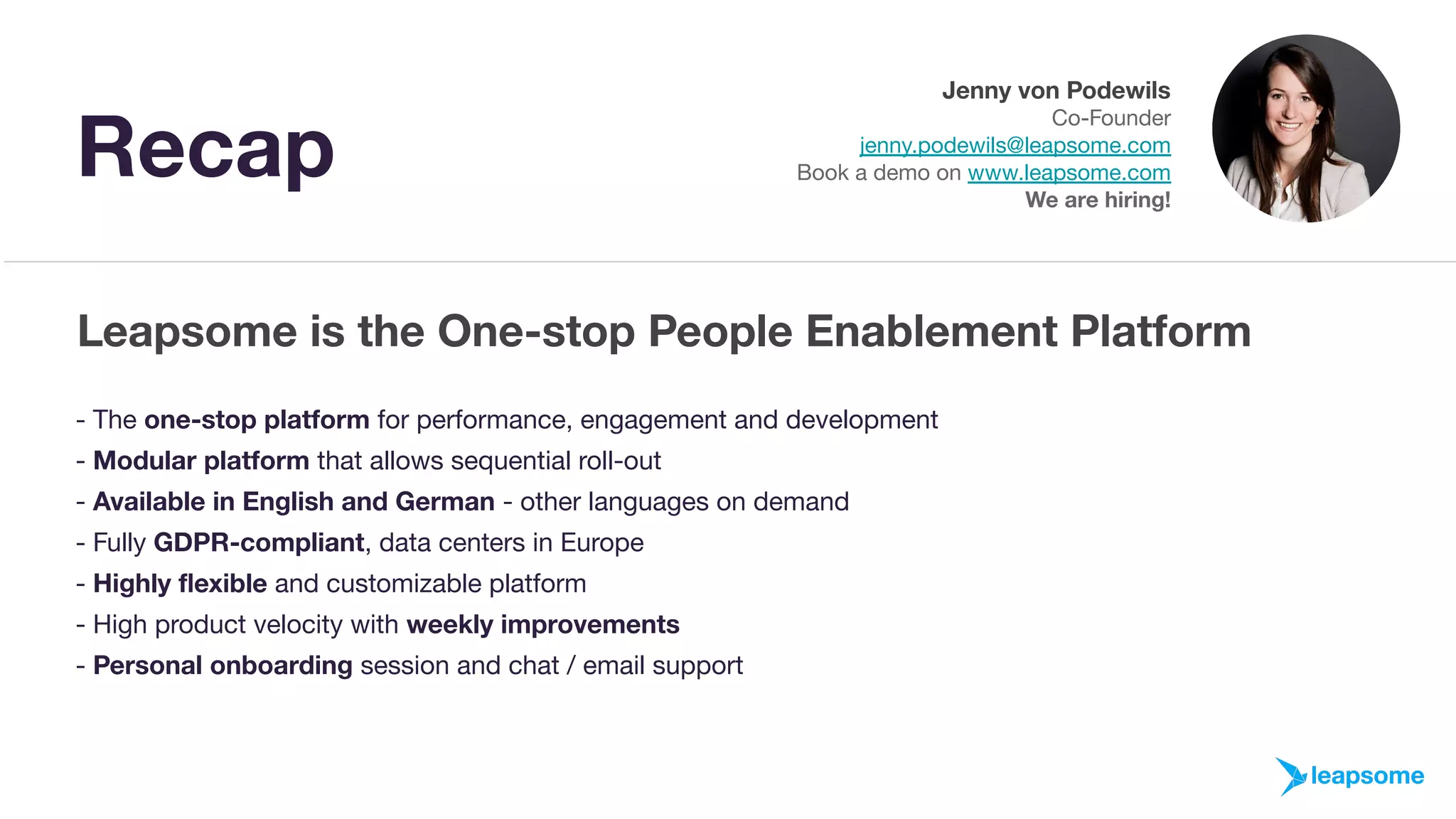
Leapsome’s deck is a strong example of a product-led SaaS pitch that combines problem urgency, tightly-mapped product modules, enterprise differentiators (GDPR/EU hosting, modularity), customer logos, and clear growth metrics. Strengths include a succinct value proposition, effective problem-to-solution mapping, and a polished product deep dive that proves the UX and analytics. The deck repeatedly links product capabilities to measurable business outcomes (reduced churn, performance improvement), which makes it easier for investors and buyers to quantify value.

Actionable advice: (1) Lead with a crisp one-line value proposition that ties emotional and practical benefits; (2) Break the problem into a small set of drivers and map product modules to those drivers; (3) Use one or two impactful, sourced metrics to quantify urgency and ROI; (4) Include at least one detailed product screenshot showing both user flows and analytics to demonstrate readiness for enterprise; and (5) Call out non-obvious differentiators (data residency, compliance, modular rollout) that matter for procurement. Together these elements create a compelling narrative that supports both product-market fit and scalable commercial growth.